Garage Door Repair in Hallandale Beach
Momentum provides garage door repair in Hallandale Beach for doors that grind, stick or hang crooked, with calls taken 24 hours a day, 7 days a week. This close to the ocean, trouble often begins with rust on the moving parts.
(954) 636-6320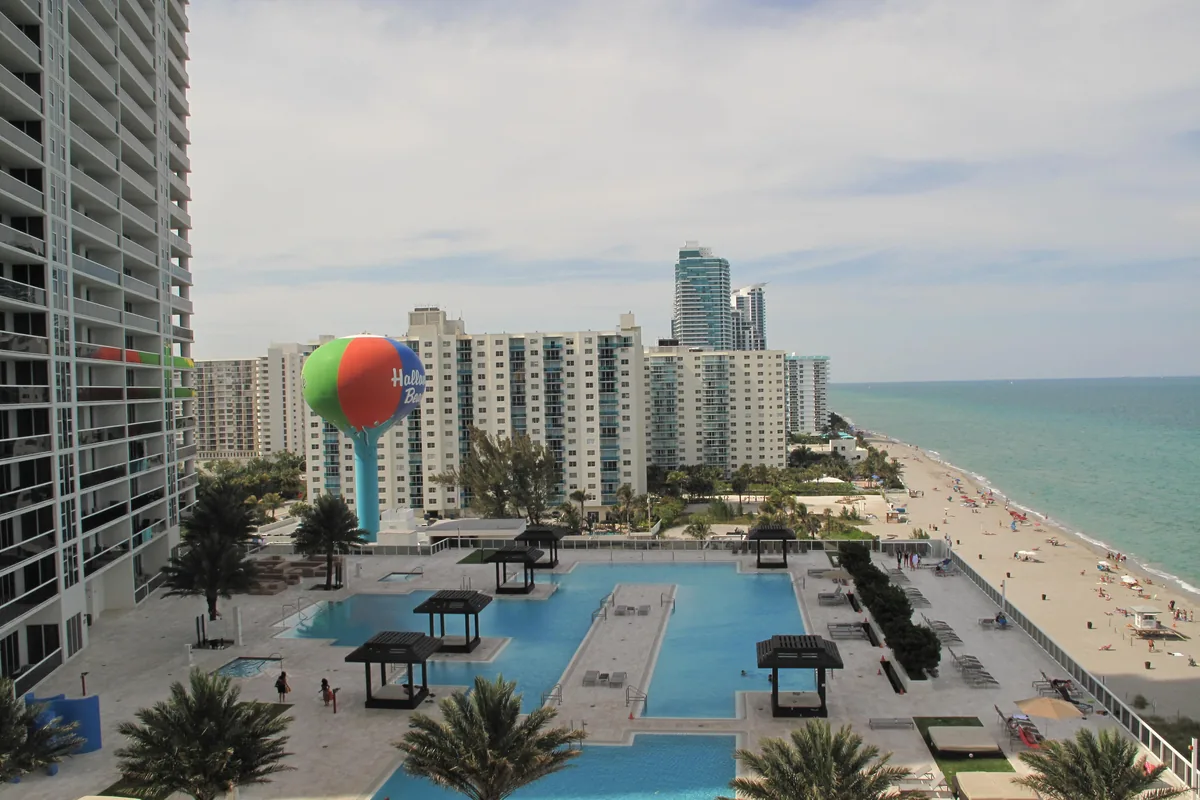
The parts damp, salty air wears first
Rollers, lift cables and the bottom seal tend to take the brunt of coastal weather. Each of these pages covers one repair.
Tides, storms and garage doors in Hallandale Beach
The City of Hallandale Beach covers about 4.55 square miles of Broward County, and its storm guidance asks residents to bring outdoor furniture and other loose items inside before a storm arrives.
Low-lying streets near the coast can take on water in heavy rain. Water that pools against a closed door soaks the bottom seal and can reach the lowest hinges and the cable ends at the bottom brackets, which is often where rust gets started.
A split or flattened bottom seal lets in water, sand and insects. It is also one of the few garage door parts many homeowners can replace without special tools, and our guide to replacing a garage door bottom seal explains the job step by step.
ZIP codes used for Hallandale Beach addresses: 33009
When a Hallandale Beach garage door needs repair tonight
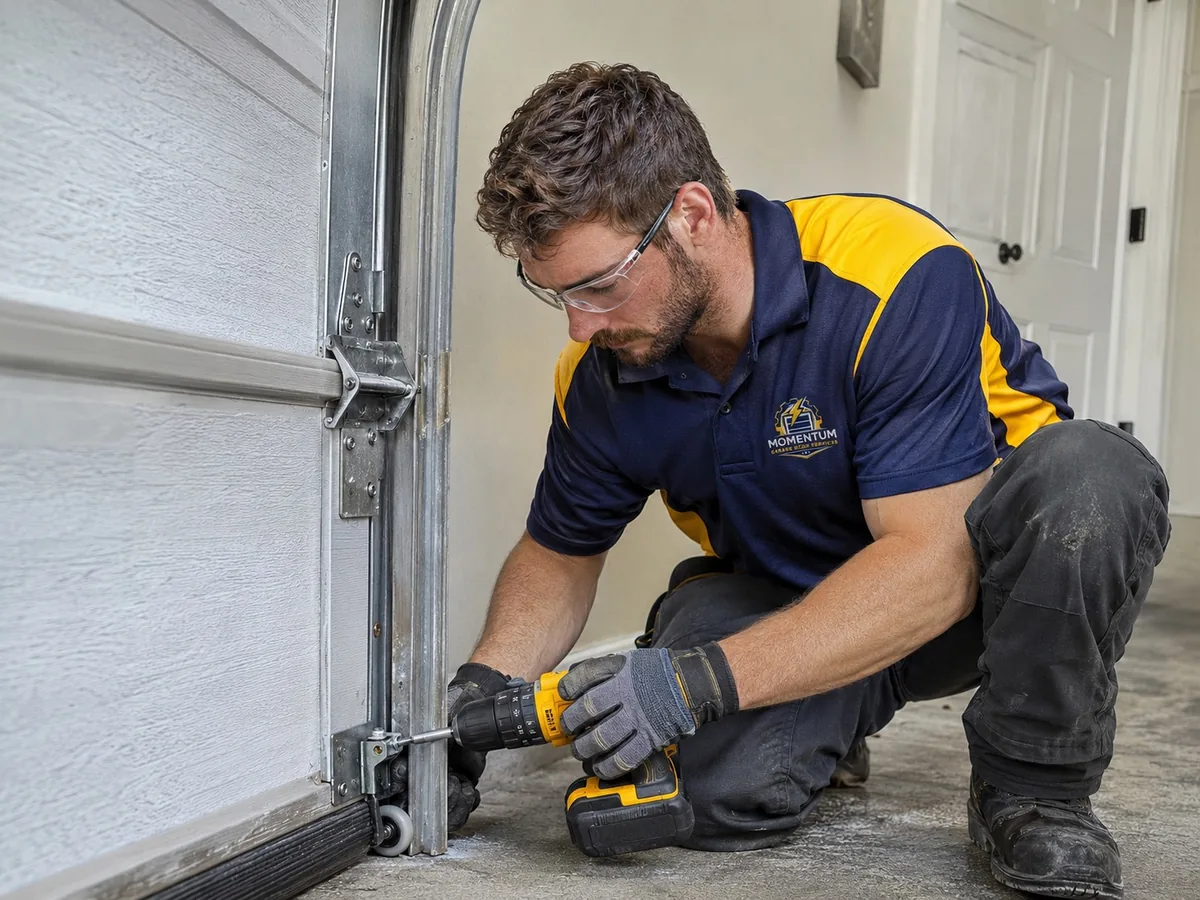
Momentum covers Hallandale Beach as one stop in a service area that runs up the coast and inland from Bal Harbour. The line is open 24 hours a day, 7 days a week, so a door that fails at night doesn't have to wait for morning to be reported.
- Before a storm, clear bikes, bins and patio pieces away from the inside of the door so nothing blocks it or gets pushed into it.
- After a high tide or heavy rain, rinse salt and sand off the bottom edge of the door and the lower track with fresh water.
- If one side of the door drops lower than the other, stop using it and call.
Where the garage doors are in a city of towers
Hallandale Beach is built up, not out. The Census Bureau's American Community Survey for 2020 to 2024 counts about 28,800 housing units in the city, and about 16,570 of them sit in buildings with 50 or more units. That is roughly 57 percent. Add the buildings with 20 to 49 units and the share comes close to 70 percent.
Detached houses make up only about 9 percent of the housing, around 2,690 units. Attached homes such as townhouses add about 4 percent more. So the private garage doors that one household owns and runs are spread across a fairly small group of houses and townhomes. Most residents park behind a shared garage entrance that the building looks after.
| Building type | Units | Share of all units |
|---|---|---|
| 1 unit, detached | 2,688 | 9.3% |
| 1 unit, attached | 1,185 | 4.1% |
| 2 to 4 units | 1,579 | 5.5% |
| 5 to 19 units | 2,281 | 7.9% |
| 20 to 49 units | 3,555 | 12.3% |
| 50 or more units | 16,567 | 57.5% |
| Mobile home | 938 | 3.3% |
Ownership is close to an even split. Of the roughly 19,700 occupied homes, about 55 percent are lived in by their owners. If you rent, the landlord or the property manager is usually the first call about a broken door.
When the house sits shut all summer
The same survey found about 6,900 housing units in Hallandale Beach held for seasonal, recreational or occasional use. That is close to one unit in four. Many are apartments, but some are houses and townhomes whose garage door may not move for months.
A door that stands still in humid, salty air doesn't really rest. Bare steel on springs, cables and roller stems can pick up surface rust. Grease in the hinges and the opener can stiffen. A spring that was already worn may give out on the first lift after a long break, because that is when it takes the full weight again.
- Before you leave, check that the door is balanced. DASMA's homeowner checklist says a door lifted by hand should stay put when you stop it 3 to 4 feet above the floor. Our balance test guide shows how.
- Give squeaky springs a light coat of spray lubricant made for garage doors, which is what DASMA's safety tips suggest.
- If a neighbor or manager will look in on the house, show them the manual release. UL 325 calls for a red handle, and DASMA's checklist says it should hang no more than six feet above the floor.
- When you come back, run the door once from the wall button and watch it the whole way. Then try the reversing test with a 2x4 laid flat under the middle of the door. Our auto-reverse test page has the steps.
- If the door jerks, one side lags or you hear a bang from overhead, stop using it and call (954) 636-6320.
Momentum answers that line 24 hours a day, 7 days a week.
Salt on both sides: the Atlantic and the Intracoastal
Hallandale Beach has salt water on two fronts. The coastal management section of the city's long-range plan puts its coastal high hazard area east of the Intracoastal Waterway, on the barrier island along the beach. That strip covers about 98 acres and holds roughly 7,526 housing units, an average of about 77 units per acre.
West of the Intracoastal, the plan describes residential canal neighborhoods such as Golden Isles and the Three Islands area, and notes that almost the whole Intracoastal and canal shoreline is lined with bulkheads. A garage on one of those streets sits beside tidal water every day of the year, not only during a storm. Here is what that exposure does to each part.
Springs
Garage door springs are steel wire wound under heavy tension. Rust pits the wire and adds friction between the coils. A rusty spring is not a broken one yet, but it is worth watching, and spring work belongs with a trained technician. See garage door spring repair.
Lift cables
The cables run from the bottom brackets up to the drums above the door. DASMA's safety tips ask homeowners to look over the cables on both sides, and to leave replacing them to a trained technician. More on cable repair.
Rollers and hinges
Salt and sand can work into roller bearings until they stop turning. A seized roller slides and scrapes in the track instead of rolling, and the door gets louder each week. See roller replacement.
The bottom section
The lowest section and its corner brackets sit where splash and puddles collect. The lift cable is fastened there, so rust at that bracket weakens the cable's anchor. Our salt air guide covers cleaning and protective coatings.
Evacuation routes, a drawbridge and a door that has to open
The city's plan describes two Broward County evacuation scenarios. For a Category 1 or 2 storm, Plan A covers all areas east of the Intracoastal Waterway. For Category 3 and stronger, Plan B covers everything east of Federal Highway (US 1). Under both, Hallandale Beach Boulevard is the main way out, and the plan names its drawbridge over the Intracoastal as the main limit on leaving the barrier island.
For a household that keeps its car in the garage, the door is part of that plan. The city's storm checklist tells residents to fill up or charge vehicles before a storm, and to switch off the circuit breakers if officials advise it. With the breakers off, an electric opener will not run. Learn to open the door without power before the day you need to.
- Pull the release cord with the door fully closed. DASMA warns that a door can start to move on its own when it is disconnected from the opener.
- Lift the door by hand once in calm weather. If it is very heavy or won't stay up, the springs are weak or broken, and DASMA's checklist says a door with a broken spring should not be run until the spring is replaced.
- During the storm, the city's guidance is not to touch electrical equipment if you are wet. That includes the opener and its wall button.
The National Hurricane Center dates the Atlantic season from June 1 to November 30, with its peak around September 10. Our hurricane preparation guide lists more steps for the door itself.
Garage door repair in Hallandale Beach and the city's Building Division
The City of Hallandale Beach Building Division applies the Florida Building Code together with Broward County's administrative provisions. Its FAQ says a permit is needed to build, alter, repair, move or demolish a building or structure, and to install, alter, repair or replace an electrical system.
The same FAQ points owners to the code's specific rules for Broward County as part of the High-Velocity Hurricane Zone. Garage doors in this zone are wind-rated products, which is one more reason the city, not a repair company, has the last word on paperwork.
- Permit documents go through the city's online portal. The Building Division's page says documents sent by email will not be processed.
- Owners of one- and two-family homes may act as their own contractor, but the FAQ says they must supervise the work themselves and appear in person for permitting and inspections.
- The FAQ does not name garage doors or openers. If a job would change the door itself, the framing around it or the opener's wiring, ask the Building Division before work starts.
Replacing a worn part is a different kind of job from changing the door, but the city decides what needs a permit. When you call Momentum, describe what you see, and take any permit question to the city directly.
A broken door in a Hallandale Beach building: who handles it
With so much of the city living in associations, the first question is often who is responsible for the door. Section 718.113 of the Florida Statutes makes a condominium association responsible for maintaining the common elements, except where the declaration assigns a limited common element to the unit owner.
A shared garage in a condo tower
The entrance door to a building's garage is normally a common element. Report it to the manager or the board. An individual owner usually doesn't arrange that repair.
A townhome or villa in an association
Read the declaration. Some put the garage door on the owner and some on the association, and many also control its color and style. Our page on HOA garage door responsibility explains what to look for.
A house you own outright
The call is yours. Match what you see to the repair below.
- A bang from above, then a door that won't lift: spring repair.
- A cable hanging loose, or one side of the door lower than the other: cable repair.
- The door hanging crooked with wheels outside the track: off-track repair.
- Grinding, scraping or rust-brown rollers: roller replacement.
- The opener hums or clicks and the door stays put: opener repair.
- The door goes back up before it reaches the floor: sensor repair.
- A dented or cracked section: panel replacement.