Off-Track Garage Door Repair
Rollers out of the track, a door leaning in its opening, a metal track bent after a bumper tap. Momentum offers off track garage door repair and track repair in Bal Harbour, North Miami and the surrounding areas, and takes calls around the clock.
(954) 636-6320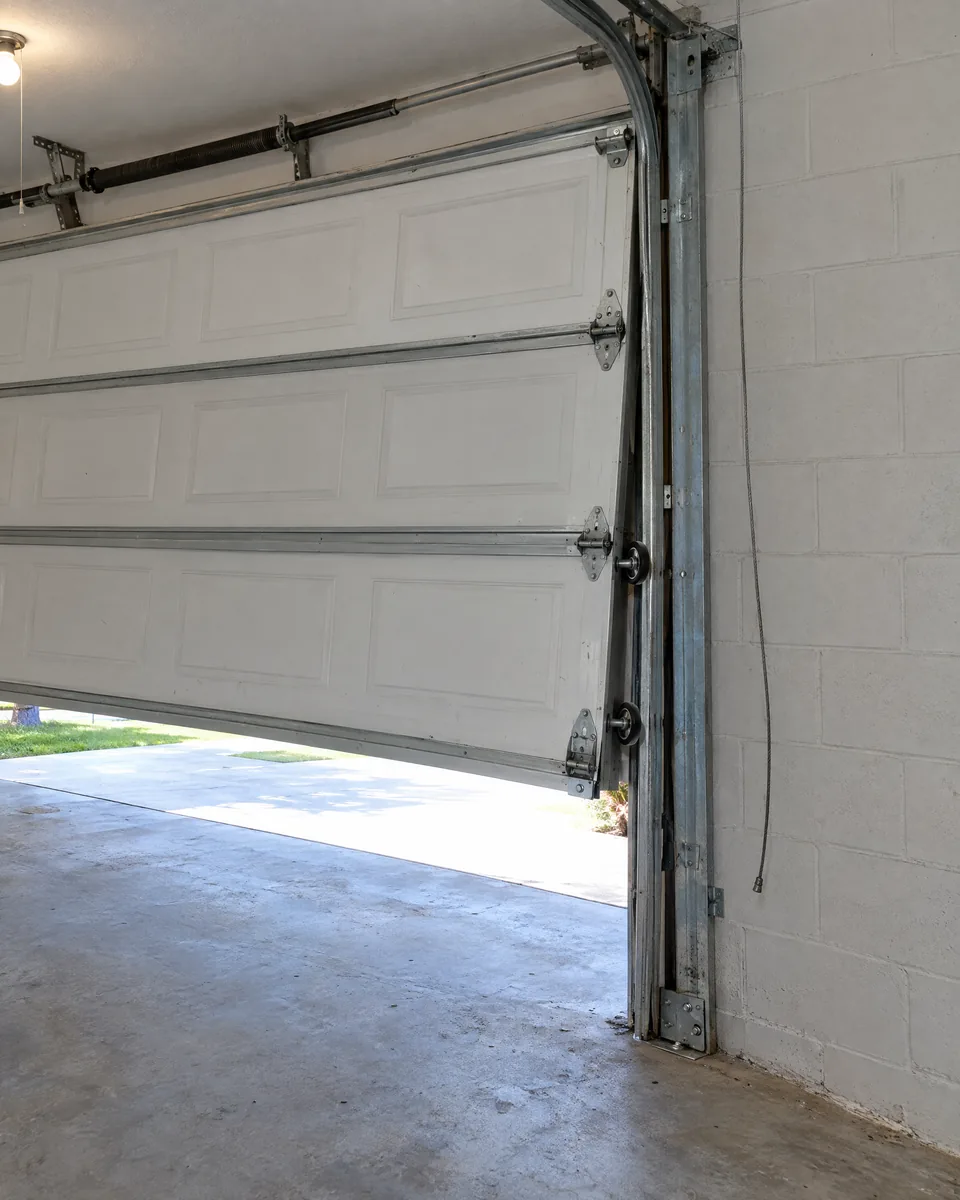
Off the track, or a track problem?
The two are linked. A bent or loose track can throw a door off, and a door that comes off can bend the track. Here is how each one usually shows up.
Off track now: stop using it
- One or more rollers sit outside the track.
- The door is tilted, with a gap at one corner.
- The door jammed partway and the opener stopped or reversed.
- A car or cart hit the door or the vertical track.
- A lift cable hangs slack on one side.
Track warning signs to book soon
- The door scrapes, pops or catches at the same spot every time.
- Track brackets wobble, or a bolt has backed out of the wall.
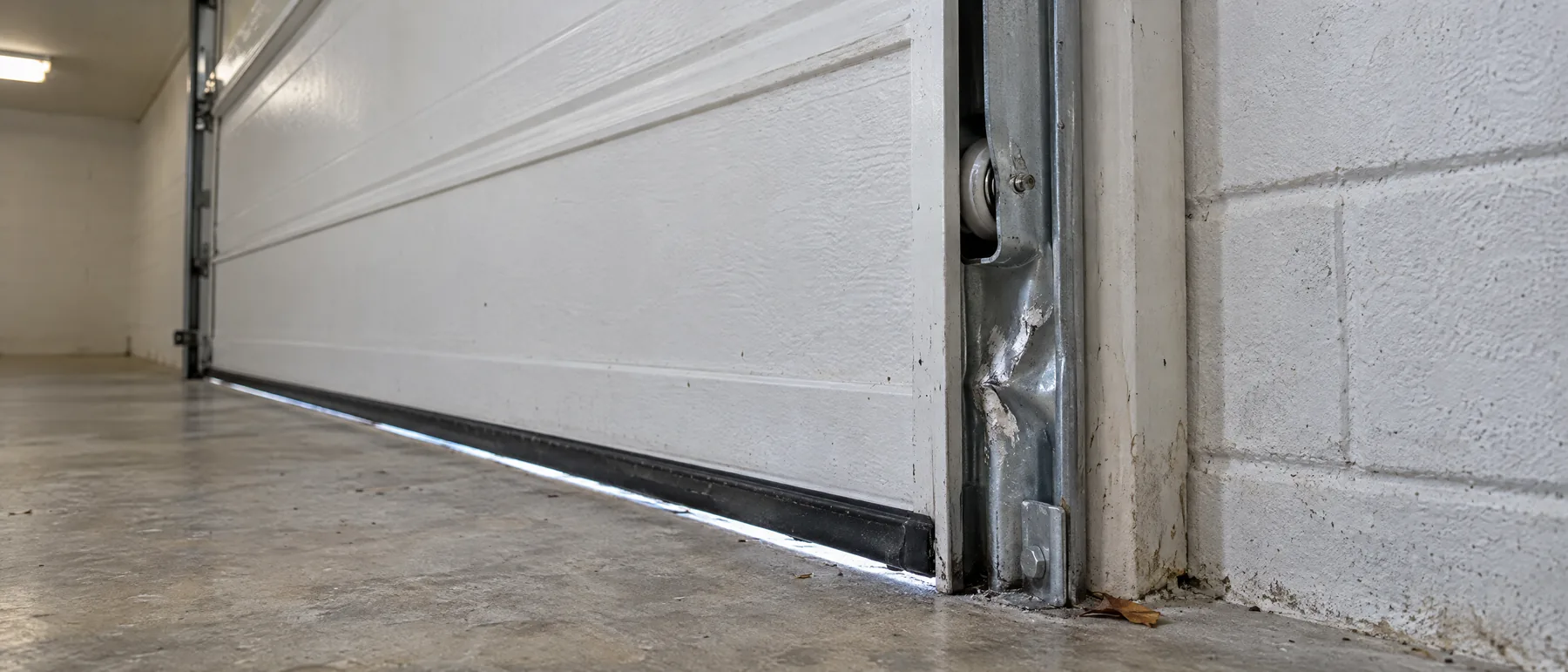
- There is a visible dent or kink in a track, but the door still runs.
- The space between the door edge and the track looks wider on one side.
What to do when a garage door comes off track
An off-track door is heavy, still under spring tension and no longer guided. The goal is to stop it moving until the cause is found.
- Stop pressing the remote and unplug the opener. Running it again can bend sections and track even further.
- Keep people, pets and vehicles out from under the door.
- Leave the emergency release alone. Disconnecting an off-track door from the opener can let it drop or slide.
- Don't hammer the track or pry rollers back in while the door's weight is on them.
- If the door is stuck open, secure the house by locking the inside entry door.
- Look for a cause you can describe on the phone, like a slack cable, a dented track or a roller on the floor.
Putting a door back on its track without fixing what pushed it off usually means it comes off again. If it can't wait until morning, see emergency garage door repair.
Why doors come off track, and garage door track repair options
Most derailments leave clues. The track comes in two parts, a vertical track beside the opening and a horizontal track that runs back toward the ceiling, and either one can be the problem. For a labelled tour of these parts, see garage door parts explained.
A slipped or snapped cable
Evidence: one side lower, a slack or broken cable. The low side twists the door and pops rollers out. The cable has to be repaired or replaced before the door can be rehung.
Cable repair →Worn or broken rollers
Evidence: wobbling rollers, cracked wheels, rusty stems, a roller lying on the floor. Worn rollers ride up and over the lip of the track. New rollers are the usual fix.
Roller replacement →A bent vertical track
Evidence: a dent or kink near bumper height, often after a car or cart touches it. A shallow, smooth bend can sometimes be straightened. A creased or twisted section is normally replaced.
Loose or misaligned track
Evidence: brackets that move, bolts pulling out of the jamb, a track that leans away from the door. Rotted wooden jambs in older garages can loosen the mounting. The fix is to realign the track and fasten its brackets into solid material.
An unbalanced door or an obstruction
Evidence: a door that feels heavy, a broken spring, or something left in the door's path. An unbalanced door pulls unevenly and can climb out of the track.
Which part of the track lets a door go
The track is more than two steel channels. Each piece has its own job, and each one fails in its own way. The names below follow the glossary published by DASMA, the trade association for door and opener makers, so they match what you'll hear from a technician.
| Part | What it does | When it goes wrong |
|---|---|---|
| Vertical track | Runs up the side of the opening and guides the rollers while the door is closed or rising. | A dent near bumper height, or a track pushed out of line, gives a roller a place to climb out. |
| Jamb bracket | An L-shaped bracket that ties the vertical track to the door jamb. | A loose bolt or soft wood behind it lets the track swing away from the door under load. |
| Horizontal radius | The curved piece where the track turns from vertical to horizontal. | The door changes direction here, so a twisted or unevenly lifted door often derails at the curve first. |
| Horizontal track and back hang | Carries the open door along the ceiling. The back hang is the angle iron that holds the rear end up. | A bent or shifted back hang lets the tracks spread, and the top rollers can drop out with the door fully open. |
| Horizontal rise | A slight upward slope built into the horizontal track. | DASMA notes it helps start the door downward and keeps the cables tight. Track that sags the wrong way can let a cable go slack. |
| Tapered vertical track | Vertical track set a little farther from the jamb at the top than at the bottom. | It lets the door seal against the jamb when closed and pull away easily when it opens. Set too wide, the rollers ride shallow and can slip out. |
The names matter less than one fact. When one part moves, it pulls the others out of line. That's why a door that has jumped its track once tends to do it again until the real cause is fixed.
Off track garage door repair starts with where the door stopped
Where the door was when it left the track says a lot about why it happened. Note the position before anyone touches it.
Near the floor, one side low
A low corner with a roller out near the bottom points to the bottom of the door. A loose or broken lift cable, a damaged bottom bracket or a dent in the lower vertical track are the usual suspects. If a cable hangs slack, see garage door cable repair.
At the curve
A door that leaves the track as it turns toward the ceiling is often twisted, out of balance or running on worn rollers. Uneven lifting shows up at the radius before anywhere else.
Fully open, at the back
Top rollers that drop out with the door open suggest the horizontal tracks have spread apart or a rear hanger has moved. A door stuck open like this is heavy and poorly supported, so keep everyone out from under it.
Both sides at once
Rollers out on both sides point to a force across the whole door. A car pushing on it, strong wind or the opener driving it into something are common examples. Look at the sections for cracks and bends, not only at the track.
Only the top section
When the trouble is at the very top, look at the top fixture, the bracket that holds the top roller, and at the opener arm that attaches near it. An opener pulling hard on a door that binds can bend this area. Opener repair covers the motor side.
The reversing rules a door has to pass after a derailment
A derailed door often comes back crooked, and a crooked door can stop the opener's safety system from doing its job. Federal law says residential openers made after 1992 must sense force on their own and also have a second safeguard, such as photo eyes near the floor.
The federal test is specific. Under 16 CFR 1211.7, an opener has to start reversing within 2 seconds of touching an obstruction. The object placed on the floor for that test is 1 inch high. A second test uses a solid block 4 inches high and 6 inches wide.
- DASMA says the reversal check should be done at installation and monthly after that. Lay a 2x4 flat under the center of the door, which makes it 1½ inches tall, and close the door on it. It should reverse.
- Photo eyes should sit no higher than 6 inches above the floor, so a small child can't crawl under the invisible beam.
- The bottom of the door has to sit level on the floor. DASMA points out that gaps between the door and the floor stop the reversal systems working properly across the full width.
So even after the rollers are back in, run the 2x4 test before trusting the door again. How to test auto-reverse walks through it, and sensor repair covers eyes that were knocked out of line.
What to note before you pick up the phone
You don't need to touch the door to describe it well. Stand clear, look, and jot down these details.
- Is the door closed, open, or stuck partway? Roughly how far is the bottom edge off the floor?
- Which side is out, looking from inside the garage, and which rollers? Count them from the bottom up.
- Is a cable loose, hanging, or wound unevenly on its drum above the door?
- Did you hear a loud bang just before it happened?
- Did a car, bike, bin or anything else touch the door or the track?
- Is the opener still connected? If someone already pulled the red release handle, say so.
- Are there long horizontal bars across the back of the sections? Those are struts, and they add weight.
The line at (954) 636-6320 is answered around the clock. If the door is stuck open and the house can't be locked, say that first.
Storms, salt air and track problems near the coast
The Atlantic hurricane season runs from June 1 to November 30. Wind pushes on a closed door, and the track and its brackets carry that load into the wall. DASMA describes struts as stiffeners that reduce how much the sections bend and increase a door's windload capability.
After a storm passes, look before you press the remote. From a safe spot, check these:
- Rollers seated in both tracks along the full height of the door.
- Jamb brackets tight to the wall, with no rust streaks spreading from the bolts.
- No sand, leaves or debris piled in the bottom of the vertical tracks.
- Every strut still fastened to each section it crosses.
- The door sitting level when it is closed.
Salt air also works on the track system between storms. Rust swells around bolts, loosens brackets and roughens the steel the rollers ride on. Protecting a garage door from salt air and getting a garage door ready for a hurricane cover the care side.
What you can safely do, and what to leave alone
The industry's own checklist is blunt about this. DASMA's home inspection sheet says repairs and adjustments should be done by a trained door systems technician with proper tools and instructions. That still leaves some useful things a homeowner can do.
Fine for a homeowner
Keep the floor and the door's path clear. Wipe dirt and sand out of the tracks with a dry cloth. Look over the brackets and rollers with the door closed. Run the monthly 2x4 test on a door that is working normally.
Leave to a technician
Re-hanging a derailed door, straightening or replacing track, and anything at the bottom bracket. DASMA defines the bottom bracket as the support that holds the lowest rollers and, on many doors, the lift cable. That cable is under spring tension the whole time the door is closed.
Two questions that catch trouble early
On a door that runs normally, DASMA's checklist asks whether the rollers stay in the track all the way up and down, and whether the door stays put when left 3 to 4 feet off the floor. A no to either is a reason to book a look before the door comes off on its own. The balance test guide explains the second check.
Off-track and track repair questions
Can I put the door back on the track myself?
It isn't a safe homeowner job. The door is heavy, the springs are still under tension, and the rollers have to go back in while the door is supported. Forcing it usually bends more track.
Can I keep using the door until it's fixed?
No. An off-track door can bind, fall or tear its hinges loose if the opener keeps running. Leave it where it is.
Is a bent track always replaced?
Not always. A small, smooth bend can often be straightened. Track that is creased, split or twisted out of shape is usually replaced, because rollers will keep catching at the damaged spot.
Does a wind-rated door need extra checks after it derails?
It's worth it. Many wind-rated doors carry horizontal reinforcement struts and weigh more than a standard door. After a derailment, the struts, hinges and section joints should be looked over along with the track.