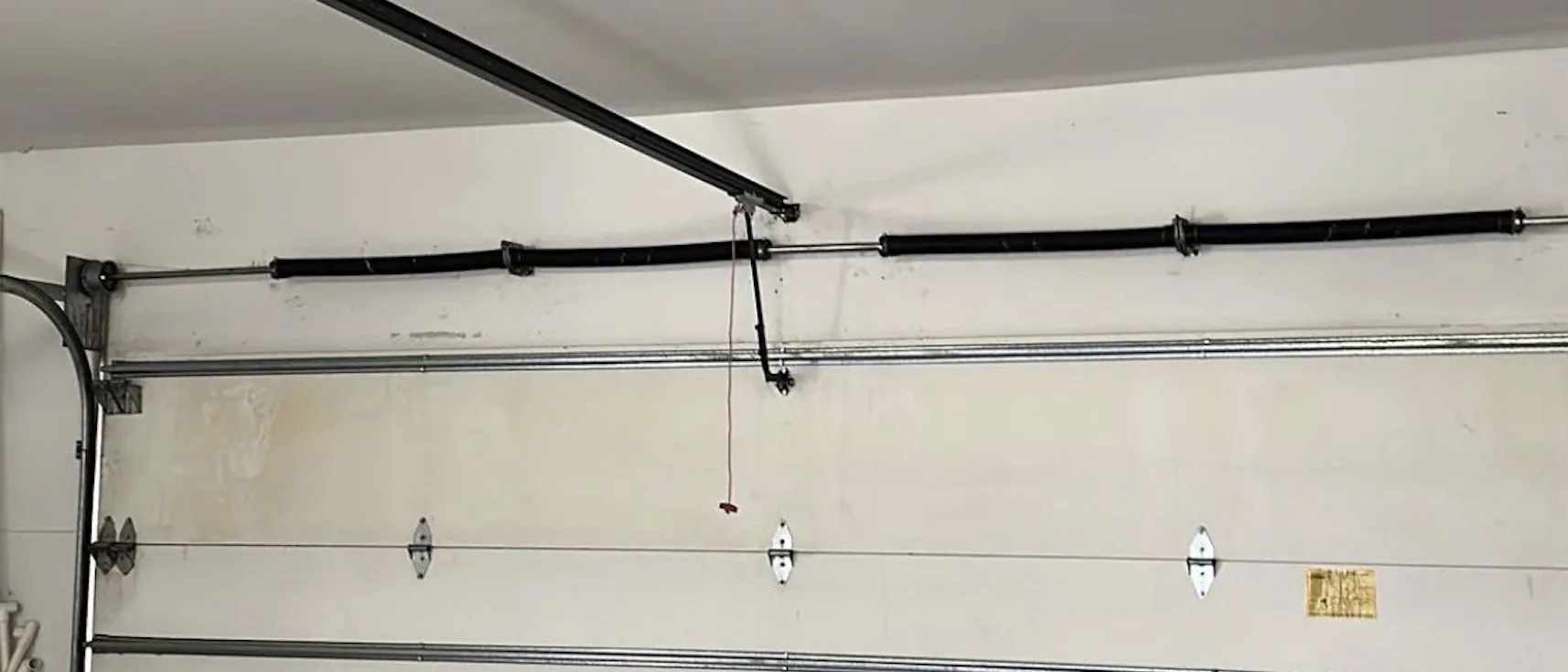
To open a garage door without power, you disconnect the door from the opener and lift it by hand. Automatic openers have an emergency release for this, usually a red cord with a handle hanging from the opener's rail. Pull it, and the door is free to move on its springs.
The release is simple, but one safety point matters more than the rest. The springs, not the opener, are what make a garage door light enough to lift. If a spring has broken, the door can be far too heavy to hold and may drop the moment it is released. So close the door first if you can, check the springs, and stop if anything feels wrong.
Storms are a common cause of power cuts, and South Florida's hurricane season runs June 1 through November 30. It is worth learning this before you need it.
Check the door before you release it
Take a moment to look before you touch anything.
- Is the door fully closed? The safest time to pull the release is with the door all the way down. If the power went out with the door open, read the note in the next section first.
- Are the springs whole? On many doors you can see a torsion spring on the shaft above the door. A gap in the coil means it has snapped. Side springs that run along the tracks should look evenly stretched, with none hanging loose.
- Are the cables in place? The thin steel cables at each bottom corner should be tight and sitting on their drums or pulleys.
- Is the area clear? Move bikes, bins and people out of the door's path.
If anything looks broken, don't release the door. Leave it as it is and get help.
How to open a garage door without power, step by step
- With the door closed, find the emergency release. It hangs from the trolley, the part that rides along the opener's rail toward the door.
- Pull the handle down firmly. On some models you pull down and then back toward the motor. The label on the handle or the opener's manual shows the right direction for your model.
- If the door has a manual slide lock on the inside, make sure it is open.
- Grip the lift handle or the bottom section, keep your fingers out of the joints between sections, and lift. A balanced door rises smoothly with modest effort.
- Raise it all the way. A door left part-open may not stay put, especially if the springs are worn.
- Close it the same way, lowering it gently rather than letting it drop.
If the door feels very heavy, or stops rising after a few inches, stop there. That usually points to a broken spring or cable, and forcing it can bring the door down. Lower it back to the floor only if you can do so with steady control.
If the door is open when the power goes out
Releasing an open door is riskier, because only the springs are holding it up. If you must close it, have two adults hold the bottom edge, pull the release, and lower the door slowly together. If it feels heavy from the start, leave it open and get help rather than trying to hold its weight.
Get help with a door that won't move safely
If the door won't lift, hangs crooked, or a spring or cable looks broken, leave it where it is. Momentum takes emergency calls 24 hours a day, 7 days a week.
Emergency repairOpening the garage door from outside
If the garage is your only way into the house, the inside cord won't help you. Some doors have an outside emergency release, a small keyed lock near the top of the door. Turning the key and pulling the lock cylinder out tugs a cable that trips the release on the trolley, which frees the door from the opener.
Not every door has one. If there is no keyed lock on the outside face of the door near the top, there is no outside release, and the safe choice is another entrance. If yours does have one, keep the key somewhere you can reach without getting into the garage. Once the door is released, lift it by the bottom just as you would from inside.
Reconnecting the opener when the power comes back
After a release, the door and the opener stay separated until you reconnect them.
- Close the door by hand.
- Open any manual lock you used, so the opener isn't fighting a locked door.
- Reset the release. On many openers you pull the cord toward the door, or simply run the opener. The trolley travels along the rail until it catches and locks onto the door arm again.
- Run the door through one full cycle and watch it. It should open and close smoothly and reverse if something crosses the safety sensors.
If the opener hums but won't move the door, or the light flashes and the door refuses to close, the guide to a flashing opener light explains the usual causes.
Getting ready for the next power cut
A few small steps make the next outage much easier.
- Try the release once on a calm day, with the door closed, so you know where the cord is and how hard to pull. Reconnect the opener afterward.
- Keep a flashlight in the house where you can find it in the dark.
- Keep the release handle within easy reach of an adult, and never tie it up out of the way.
- Think about an opener with a battery backup. Many current models can run the door for a limited number of cycles after the power goes out. If an old opener is due for replacement anyway, fitting a new opener is a good time to ask about one.
Short answers to other everyday questions are collected on the garage door FAQ page.