Garage Door Repair in Hollywood, FL
Need garage door repair in Hollywood, FL? Momentum takes calls 24 hours a day, 7 days a week for broken springs, doors that slip out of their tracks and doors that feel far heavier than they should.
(954) 636-6320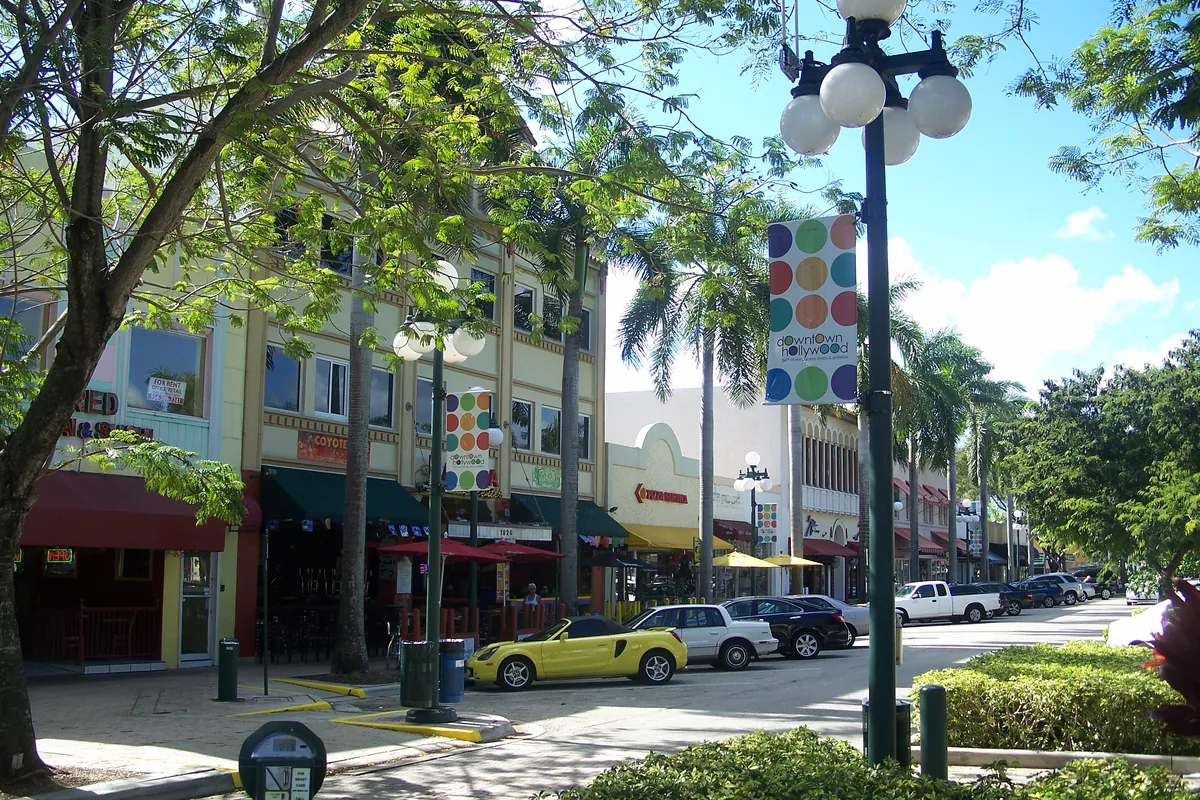
What we fix on Hollywood garage doors
Most door failures trace back to the springs, the cables or the tracks. Find yours below.
A century of houses, and the doors that come with them
The City of Hollywood dates to 1925. Today it spreads across about 30 square miles of southeastern Broward County, with seven miles of beaches along its eastern edge.
A city that has been building homes for that long holds garage doors of every age. Some older doors still lift on extension springs that run along the sides, while many others use a torsion spring on a bar above the opening. Both kinds lose tension with use, and a door that drifts out of balance makes the opener strain on every trip and puts extra load on the tracks and rollers.
You can check the balance yourself in a few minutes. Our guide to the garage door balance test explains how to run it and what the result tells you. During hurricane season the city also points residents to their evacuation zone and the Broward County hurricane hotline, which are worth looking up before a storm is on the way.
ZIP codes used for Hollywood addresses: 33019, 33020, 33021, 33023, 33024, 33025, 33026, 33027, 33028, 33029
Garage door repair in Hollywood, FL, whenever it breaks
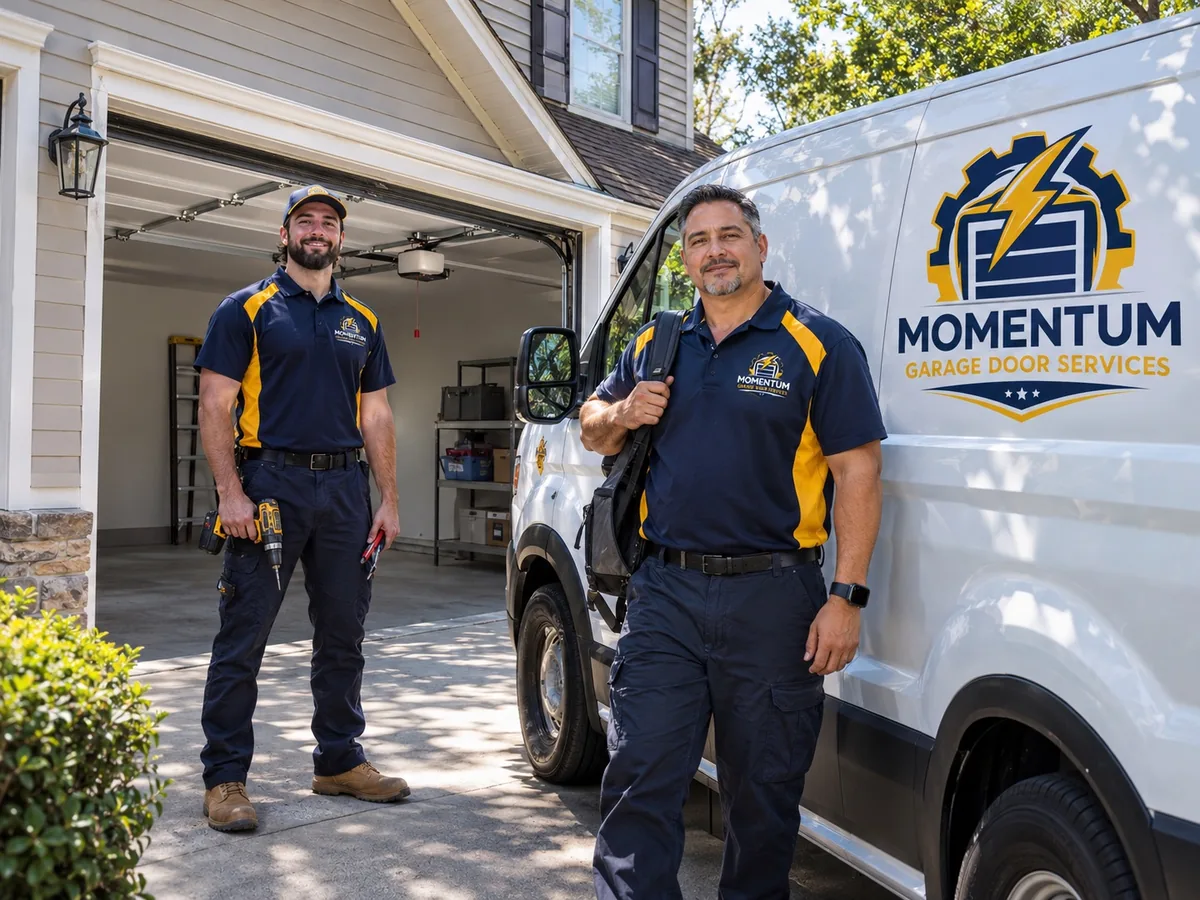
The city sits well inside the area Momentum serves, which runs north from Bal Harbour into Broward County. Someone picks up the phone at night, on weekends and on holidays too.
- Listen for where a noise comes from: the springs overhead, the rollers at the sides or the opener on the ceiling.
- If a roller has come out of its track, leave the door where it is until it is repaired.
- Tell us which springs you can see, long ones along the sides or one bar above the door.
Most Hollywood homes went up between 1950 and 1979
The Census Bureau's American Community Survey for 2020 to 2024 counts about 72,800 housing units in Hollywood. Close to 51,000 of them, about 70 percent, date from the 1950s, 1960s and 1970s. The median year built is 1969.
| Built | Units | Share |
|---|---|---|
| 1939 or earlier | 874 | 1.2% |
| 1940 to 1949 | 2,581 | 3.5% |
| 1950 to 1959 | 16,788 | 23.0% |
| 1960 to 1969 | 17,946 | 24.6% |
| 1970 to 1979 | 16,201 | 22.2% |
| 1980 to 1989 | 6,852 | 9.4% |
| 1990 to 1999 | 4,175 | 5.7% |
| 2000 to 2009 | 4,971 | 6.8% |
| 2010 or later | 2,455 | 3.4% |
A house from 1960 probably isn't running its first garage door or its first opener. What many older garages hold is a mix: a door from one decade, an opener from another, and hardware added along the way. So the useful question about a Hollywood door is what is actually hanging in the opening today, not when the house was built.
Extension springs and the cable that should run through them
If your door has extension springs, the long springs that stretch beside each horizontal track, check one thing this week. DASMA's inspection checklist says extension springs should be contained by a secure cable running through the center of each spring. When a spring snaps, that cable keeps the broken pieces from whipping across the garage. Torsion springs sit on a steel shaft, which DASMA notes already gives that containment.
How to look
Close the door fully and stand inside. Look along each spring for a thin cable passing through the coils and tied off at both ends, to the wall or the ceiling, as DASMA's safety tips describe it. Look only. Don't touch the springs or their brackets.
If there is no cable
DASMA advises calling a dealer for an inspection. Until then, keep people, pets and cars well clear of the door while it moves.
If a spring has already broken
DASMA's checklist is blunt about it: a door with a broken spring should not be run until the spring is replaced. That includes pressing the opener button. An opener dragging up a door with a dead spring is doing work it was never built for.
Springs, cables and brackets are work for a trained technician, which is how DASMA puts it as well. Our spring repair page compares the two spring types in more detail.
King tide weeks and the bottom of a Hollywood garage door
The city's stormwater page says much of Hollywood lies at or near sea level, and that some neighborhoods flood several times a year. Its king tide notice posted November 4, 2026 warned low-lying and coastal areas, Hollywood Beach among them, and places with low or no seawalls. It listed these periods for the rest of the year:
- November 5 to 11
- November 22 to 28
- December 5 to 8
- December 23 to 27
The city's advice is to move vehicles to higher ground when tidal flooding is expected. If the car lives in the garage, the door has to work on the day the water is coming. Open and close it the evening before. If it labors or stops halfway, there is still time to move the car early and get the door looked at.
Tide water is salt water. Once it drains away, hose the lowest section, the corner brackets where the cables attach and the bottom of each track with fresh water. A torn or flattened seal at the floor lets water in on the next tide, and our guide to replacing the bottom seal covers that job. For longer-term protection, see salt air protection.
What Hollywood's permit pages say about doors and wiring
Hollywood's Building Division FAQ says a permit is needed to construct, enlarge, alter, repair, move, remove or demolish a building or structure, or any part of one. When you aren't sure, the FAQ suggests asking the division's chief inspectors.
The city also explains a state exemption for small single-family projects worth less than $7,500 in total. Only a short list qualifies, such as fence pickets, floor tiles and gutters. The city lists windows and doors among the structural work that never qualifies, whatever the cost, and it also leaves out electrical work and any work in a flood hazard area.
Doors
The exemption page says windows and doors. It doesn't mention garage doors by name, so a garage door question goes to the Building Division, which the page invites you to contact.
Openers and outlets
Adding an outlet or a circuit for an opener is electrical work, and electrical work is outside the exemption.
Historic districts
The city's FAQ says the Historic Preservation Board reviews requests inside historic districts and for designated historic sites, including substantial alterations. If your home is in one, ask before changing how the front of the house looks.
Before any job that changes the door itself or adds wiring, put the permit question to the city. The Building Division's page says permits can be applied for online through Broward County's ePermitsOneStop system.
Garage door repair in Hollywood before a storm has a name
The National Hurricane Center dates the Atlantic season from June 1 to November 30 and puts its peak around September 10. FEMA's wind tips for homeowners include reinforcing garage doors against wind pressure, with girts and stronger tracks for the glider wheels. Girts are the horizontal steel braces across the back of a door.
A garage door is often the widest opening in a house. On a wind-rated door, the bracing and the way the tracks hold the rollers are part of what keeps it in place. A repair that leaves a brace off or a loose track weakens the door at exactly the wrong time of year.
- Look across the inside of the door for the horizontal braces. Every bolt should be in place and tight.
- Watch the rollers through one full cycle. A roller that wobbles or jumps the track is worth fixing before the peak of the season, see off-track repair.
- The city tells residents to find out whether they live in an evacuation zone and to plan on being self-sufficient for at least five to seven days after a hurricane.
- The city also says power outages are common in a hurricane. Practice the opener's manual release now, using our guide to opening a garage door without power.
More storm steps for the door are in our hurricane preparation guide.
Matching the problem to the right repair in a Hollywood home
Hollywood is more a city of houses than its beachfront skyline suggests. The same Census survey counts about 31,650 detached single-family homes, 43 percent of all units, plus about 3,900 attached homes such as townhouses. Buildings with 50 or more units hold about 13,660 units, close to 19 percent. About 59 percent of occupied homes are lived in by their owners.
In a detached house the owner decides what happens next. In a townhome community or a condo building, the association's documents may decide for you, so read them first, or see our page on who repairs a garage door in an HOA. Then use the table to find a starting point.
| What you notice | What it often means | Start here |
|---|---|---|
| The door feels far heavier than usual, or a spring shows a gap | A broken spring | Spring repair |
| The door sits crooked, lower on one side | A slipped or broken lift cable | Cable repair |
| Wheels have left the track | An off-track door, often after a bump or a cable failure | Off-track repair |
| Squealing or grinding along the sides | Worn or seized rollers | Roller replacement |
| The motor runs but the door doesn't move | A released trolley or a worn drive gear | Opener repair |
| The door closes partway, then reverses | Blocked or misaligned safety sensors | Sensor repair |
| A section is cracked or bent | Panel damage | Panel replacement |
Then call (954) 636-6320. It helps to know the door's width and whether the opener makes any sound at all.