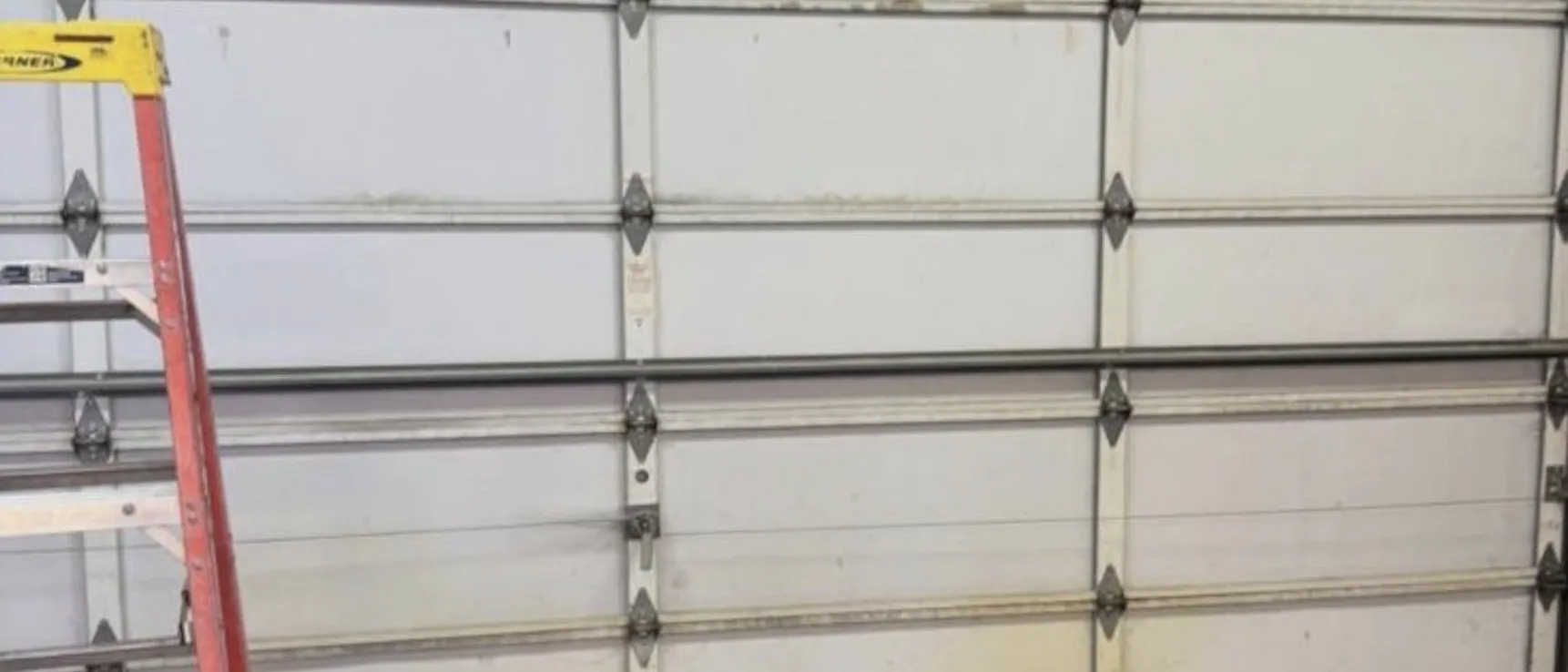
Flood vents in a garage door are openings that let flood water flow into and out of the garage on its own, so the water inside rises and falls with the water outside. FEMA calls them flood openings. Their job is to even out the pressure of standing water on the walls, which helps prevent damage to the building or its collapse. If your door has them, they are there on purpose, and a repair to that part of the door has to keep them working.
That's a real question in Hallandale Beach. The city's 2020 Post-Disaster Redevelopment Plan says about half of the land in Hallandale Beach is in a FEMA Special Flood Hazard Area. This guide explains why some garage doors there carry vents, how to spot them, and what to keep in mind if a vented section gets damaged. Momentum's garage door repair in Hallandale Beach page covers the other repairs.
Why there are vents in some Hallandale Beach garages
The Hallandale Beach Post-Disaster Redevelopment Plan (2020), shared by the South Florida Regional Council, reports that approximately half of the land in the city lies in a FEMA Special Flood Hazard Area. It also says Hallandale Beach was home to more than 150 Repetitive Loss Properties, FEMA's term for properties with repeated flood insurance losses. Those were the figures in 2020. Flood maps and counts change, so treat them as a picture of the city at that time.
In a flood zone, FEMA's National Flood Insurance Program rules allow the floor of an attached garage to sit below the base flood elevation if the garage meets the requirements for an enclosed area. Its use is limited to parking vehicles, getting into the building and storage, and it needs flood openings. FEMA's Technical Bulletin 1 says flood openings are required in the exterior walls of garages in Zone A.
So if you see vents set low in your garage walls, or in the bottom of the door, they may well be flood openings. Some homes have them only in the walls. Some have them in the door, usually because there wasn't enough wall to hold all of them. The city or the home's flood paperwork can confirm which kind you have.
Are flood vents required in a garage door?
Not in the door as a rule. FEMA's Technical Bulletin 1 (March 2020) says openings may be installed in garage doors, but it steers builders away from it. Its reason is practical. Garage doors are likely to be replaced over the life of a building, and a later owner may put in a door without openings and never realize it mattered. So FEMA says openings should go in garage doors only when there isn't enough wall area for the required number.
The same bulletin is clear about what does not count as a flood opening:
- The garage door itself. Someone would have to open it when flooding is expected, and flood openings have to work with nobody there.
- A door that opens automatically when it detects water. FEMA notes that electric service can't be guaranteed, even with a backup power source.
- Gaps around the door. Space between the door and the jamb or walls doesn't count toward the required open area.
Whether a particular home meets these rules is a question for the City of Hallandale Beach, not for a garage door repair. This guide explains the rules so you know why your vents exist. It isn't advice on whether your home complies.
Is that a flood vent or an ordinary vent?
Flood openings in a door usually look like a framed, louvered vent set into one of the lower sections. A few things help tell them apart:
- Height. FEMA requires the bottom of each opening to be no more than 1 foot above the higher of the finished floor inside or the outside grade under the opening. Flood openings sit low for that reason.
- Whether it can be shut. FEMA says air vents that can be closed by hand don't count unless they're permanently disabled in the open position. A flood opening is meant to stay open, or to open by itself when water rises.
- Markings. Engineered openings are designed and certified by a registered design professional. Look for any label or model marking on the vent frame and write it down.
- Paperwork. If the home has a flood elevation certificate, it may describe the flood openings. A past permit file can help too.
If you're still not sure, take clear photos of the vents inside and out, measure them, and ask the city. That record is also exactly what a repair will need later.
What a garage door panel repair must keep
A car bumper or storm debris can damage one section of a door and leave the rest fine. Often that section can be replaced on its own, as garage door panel replacement explains. When the damaged section is the one with the vents, the repair has more to get right:
- The vents stay. A replacement section without openings takes them out of the garage, which is the exact situation FEMA warns about. If no matching vented section can be found for the door, stop and talk to the city before anything changes.
- The same open area. FEMA's rules count square inches of net open area, so the openings in the new section should match the old ones in number and size. Measure the old vents and note any model marking before the damaged section comes out.
- The same height. Flood openings only work near the floor. A vent moved higher up the door is not the same opening.
- Nothing blocking them. FEMA says screens, grilles, louvers, covers and other devices must not block flood water flowing in and out. A solid insert, or a cover meant to be put on by hand, doesn't qualify.
- The rest of the door still matches. A new section has to fit the door's make, model, size and profile. If the door carries a wind rating, the section has to match that too.
Adding vents, moving them or changing how many there are is a different job from a like-for-like section swap, and it may need a permit. Ask the city before that kind of change, not after.
Garage door panel replacement
One bent or cracked section can often be replaced without touching the rest of the door. If it holds flood vents, the new section has to keep them, so note the vents before work starts.
Panel replacementKeeping flood vents working between storms
A vent that is clogged on the day water arrives does very little. A few minutes a season keeps them clear:
- Clear leaves, sand, spider webs and wasp nests out of the louvers.
- Rinse salt and grit out with a garden hose. On vents with moving flaps, salt crust can make them stick.
- Don't cover the vents with boxes, shelving, tape or weatherstripping, inside or out. A garage door insulation kit should leave the openings clear.
- Keep stored items off the floor near the vents so water has a clear path in and out.
- After a flood, check that any flaps still move freely and that each vent frame is still tight in the panel.
Salt and damp air work on the rest of the door's hardware as well. The salt air protection guide covers rinsing and lubricating the moving parts, and getting a door ready for hurricane season covers the checks to make before June 1.
Questions to settle before a vented section is changed
For the City of Hallandale Beach
- Is my property in a Special Flood Hazard Area?
- Are the vents in my garage door counted as the home's flood openings?
- Does replacing the vented section, or changing the vents, need a permit?
For the repair
- Can a matching section with the same vents be found for this door?
- If not, what are the options, and who has to sign off on them?
For your own records
- Photos of the vents inside and out, their markings and their measurements.
- The paperwork from the repair, kept with the home's flood documents.
A section that is only dented and still closes square may not need replacing at all, and its vents can stay just where they are. The guide to fixing a dent in a garage door explains when a dent can be left alone. For a section that can't be saved, Momentum takes calls at (954) 636-6320, 24 hours a day.