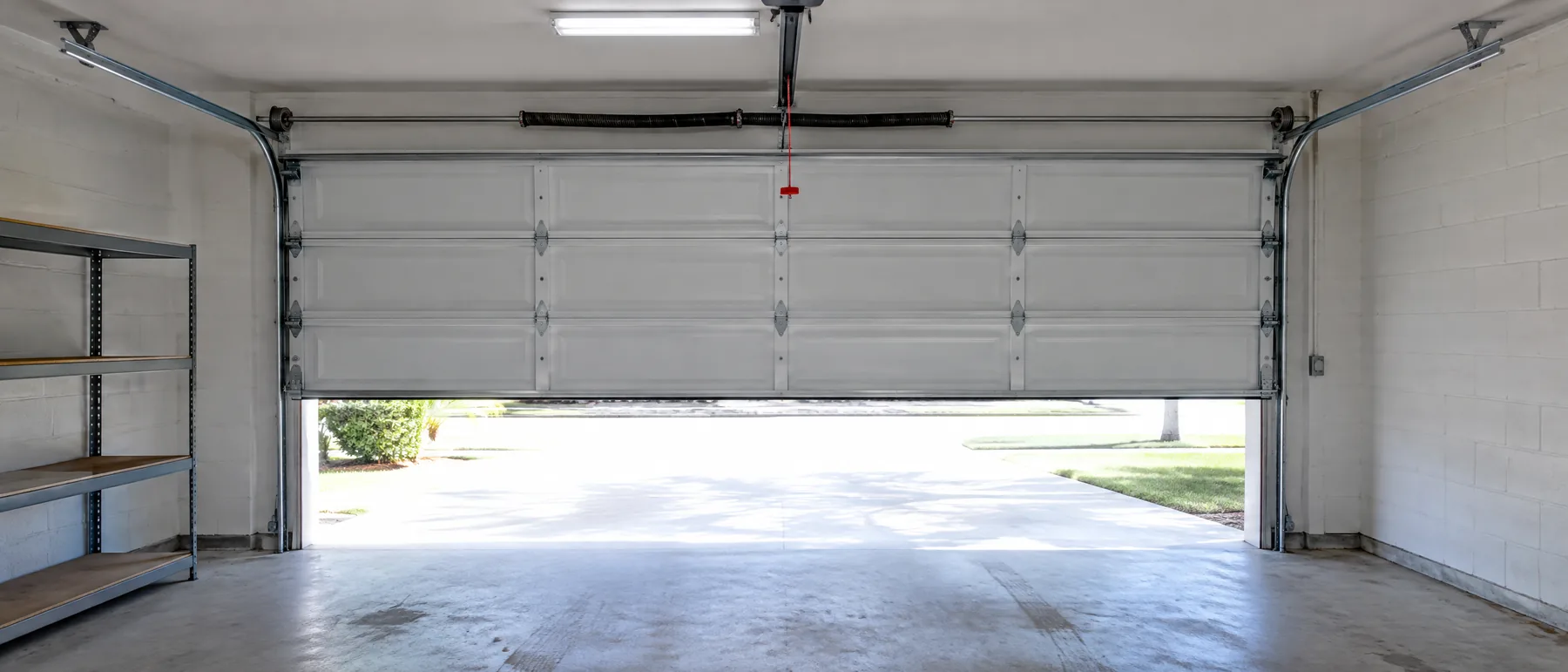
To check garage door balance, close the door fully, disconnect the opener, lift the door by hand to about halfway and carefully let go. A balanced door stays roughly where you leave it. A door that sinks or rises on its own has springs that no longer match its weight.
That's the whole test, and it takes a couple of minutes. The order of the steps matters, because it keeps the door from dropping, and the result tells you a lot about the springs. What it doesn't do is make spring adjustment a DIY job. If the door fails the test, the fix belongs to a technician.
Why garage door balance matters
The springs do the heavy lifting on a garage door, not the opener. On a balanced door the springs carry nearly all of the door's weight, so it feels light by hand and the opener only has to guide it.
As springs age they lose tension. The door gets heavier to lift, and the opener has to make up the difference. That extra strain wears the opener's gears and motor, and a heavy door also comes down harder than it should. A balance check catches that change before something breaks.
Before you start: when not to test
Look the door over before you touch the release cord. Skip the test if you see any of these:
- A torsion spring above the door with a gap in its coils.
- A stretched or broken extension spring along the side tracks.
- A lift cable that is frayed, slack or off its drum.
- A door that hangs crooked or has a roller out of the track.
- A door stuck partly open.
Any of these means the springs may not be holding the door. Releasing the opener in that state can let the door fall.
The garage door balance test, step by step
- Close the door all the way. Only release the opener with the door fully closed. If a spring is weak or broken, a door released while it is open can drop.
- Pull the emergency release cord hanging from the opener rail. This separates the door from the opener so you can move it by hand.
- Lift the door by hand to about halfway, roughly waist height on a standard door. Use a handle or the bottom edge, never the joints between sections, where fingers get pinched.
- Let go slowly. Keep your hands close for a moment but never under the door, and keep feet, children and pets clear.
- Watch what it does. A balanced door stays put or moves only an inch or two. Some people repeat the check near knee height and near the top for a fuller picture.
- Close the door and reconnect the opener. On many openers, running the opener re-engages the trolley on its own. Others need the cord pulled in a certain direction. The opener's manual says which.
Get the springs looked at
A door that drifts, drops or feels heavy needs its springs and cables checked. Momentum covers garage door repair in Hollywood, 24 hours a day.
Hollywood repairsWhat the result tells you about the springs
How the door behaves when you let go is a good sign of spring condition:
- It stays put. The springs suit the door. Reconnect the opener and carry on.
- It drifts down. The springs aren't carrying enough of the weight. This is the usual result with older springs, which lose tension over years of use.
- It drifts up. The springs have more tension than the door needs. That's less common and can follow a spring change that wasn't matched to the door.
- It drops quickly. Keep clear and don't try to catch it. A spring or cable may have failed, so leave the door closed and don't use it until it's checked.
Notice how the door felt on the way up, too. A door that is hard to lift by hand is heavier than its springs are set for. For how springs wear out and roughly how long they last, see how long garage door springs last.
Why spring adjustment isn't a DIY job
It's tempting to think a few turns on a spring will fix a door that drifts. Don't try it. Torsion springs are wound tight enough to lift the full weight of the door, and adjusting them means working against that stored energy with winding bars. A slip can cause a serious injury. Extension springs store energy the same way and can whip loose if a fitting fails.
A spring that has lost tension is often near the end of its life anyway, so the right fix may be new springs sized for the door rather than more tension on old ones. That calls for garage door spring repair, not a weekend project.
If you're in Hollywood and your door failed the test, you can call Momentum about getting your Hollywood garage door repaired.
How often to run a balance check
A few times a year is a sensible habit, and some opener manuals suggest checking monthly. It's also worth doing whenever something changes: the door sounds different, the opener strains or reverses for no clear reason, or the door takes a knock.
Pair it with a check of the opener's safety reversal, which takes about as long. Testing the auto-reverse walks through it.