Garage Door Spring Repair
A loud bang from the garage, then a door that refuses to lift. That is the classic sign of a broken spring. Momentum handles garage door spring repair and replacement in Bal Harbour, North Miami and the surrounding areas, and takes calls 24 hours a day, 7 days a week.
(954) 636-6320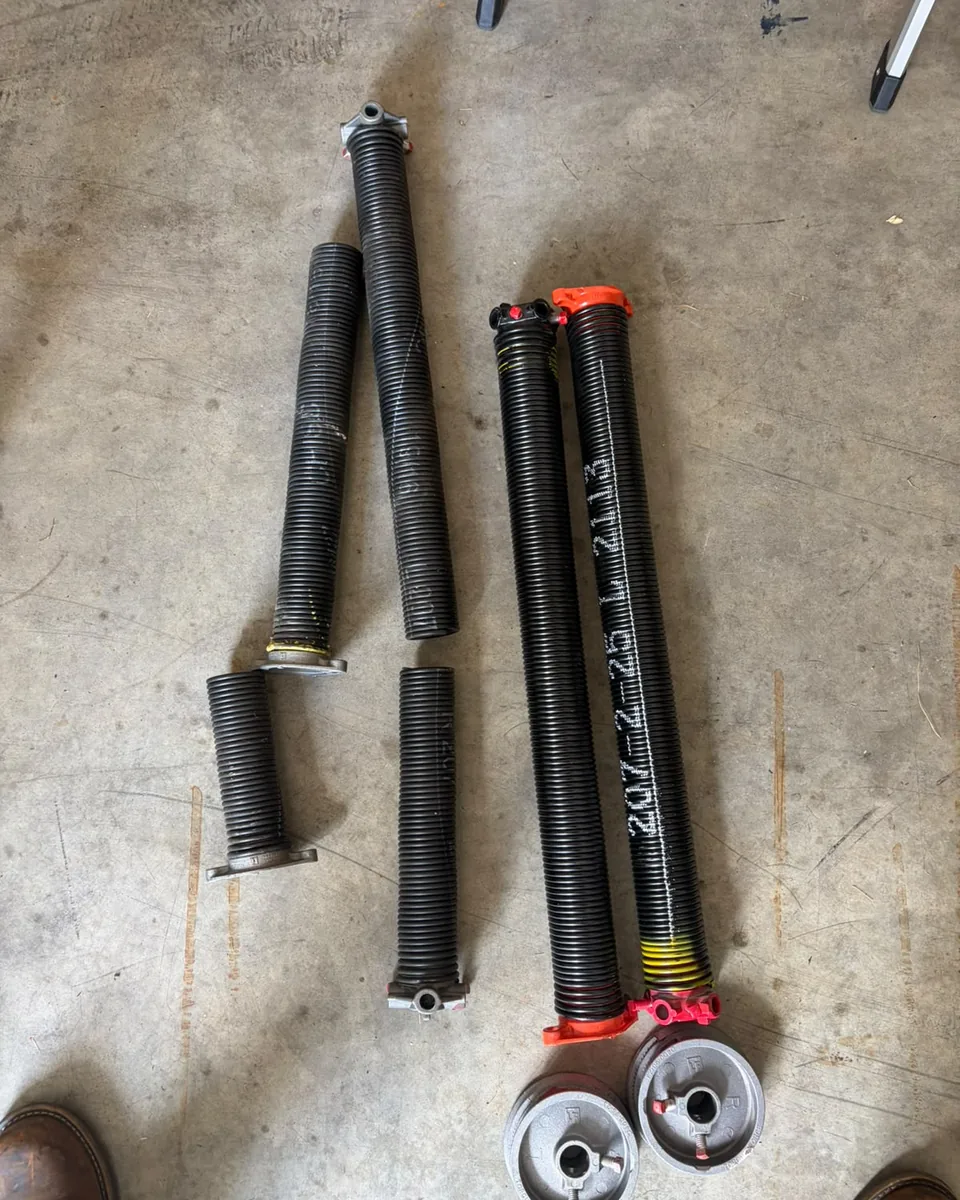
Is it the spring?
Springs do the heavy lifting. The opener only guides a door that the springs have already balanced, so when a spring fails the door suddenly behaves like dead weight.
Signs a spring has broken
- You heard a sharp bang, like a firecracker, from inside the garage.
- A torsion spring above the door shows a gap of a few inches between its coils.
- The door rises a few inches and stops, or the opener hums and gives up.
- The door slams down harder than usual when it closes.
- Cables hang loose beside the door, or one side sits lower than the other.
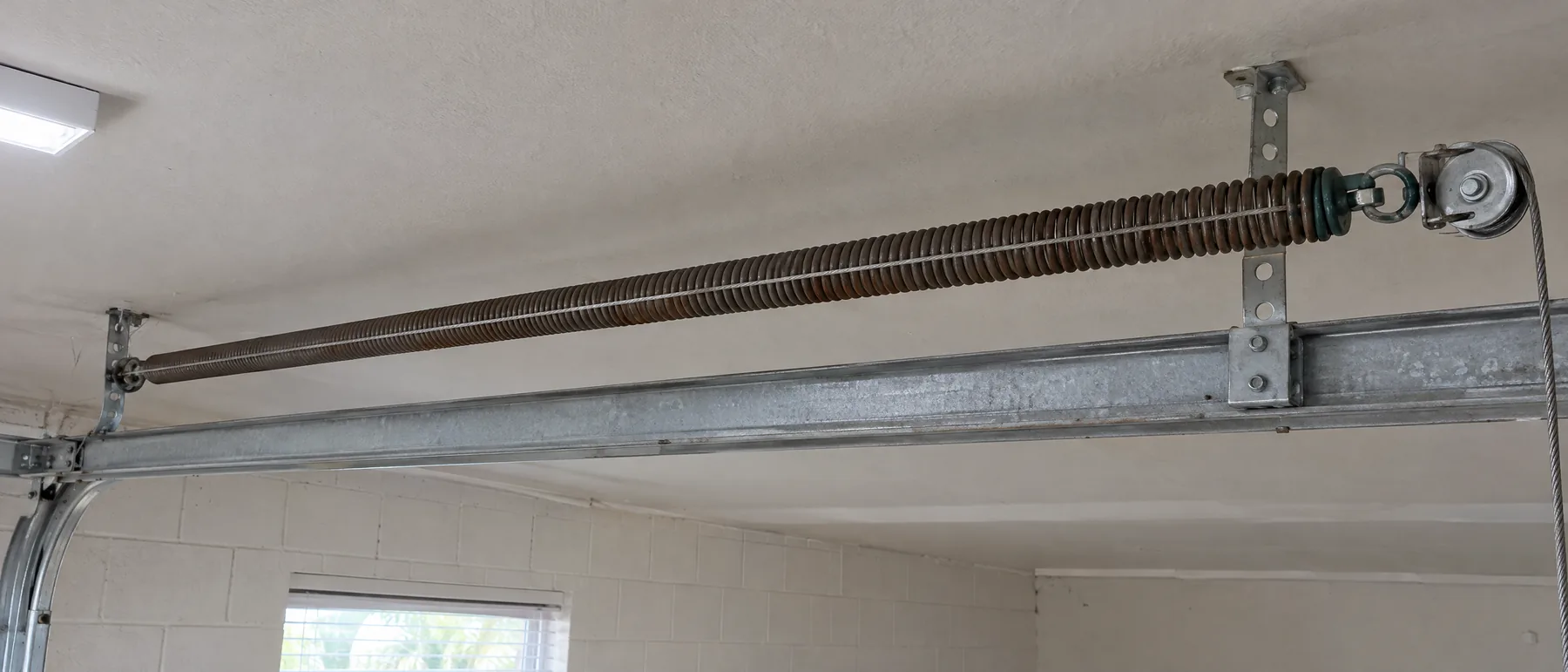
- An extension spring along the side track looks stretched out or has come apart.
Signs it's probably something else
- The door moves, but grinds, squeaks or rattles along the way.
- The opener runs but the door doesn't move at all. A released trolley or an opener fault is more likely.
- The door reverses just before it touches the floor, which usually points to the safety sensors.
- One roller wobbles or rubs in the track while both springs look whole.
Garage door spring safety at home
A wound torsion spring stores enough energy to lift a door that can weigh well over a hundred pounds. Winding or unwinding one takes proper winding bars and training, and a slip can cause serious injury. This is the one part of a garage door that should be left alone.
- Leave the door in the position where it stopped. Don't try to finish opening or closing it.
- Unplug the opener or switch it off, so nobody presses the remote out of habit.
- Don't pull the emergency release cord while the door is open. Without spring tension, the door can drop the moment it is freed from the opener.
- Keep hands away from the springs, the cables and the brackets at the bottom corners of the door.
- If a car is trapped inside, don't try to lift the door to get it out. Call and describe the situation instead.
- Note what you saw and heard, such as the bang, a gap in the coil or a loose cable. It helps whoever comes out understand the failure.
After a spring is replaced, a well-balanced door should stay roughly in place when it is stopped about halfway up. The garage door balance check explains that test, which is worth repeating once a year.
The two spring types on residential doors
You can usually tell which kind you have from the floor. Look above the top of the door opening, then along the tracks on each side of the ceiling.
Torsion springs
One or two tightly wound coils on a steel shaft just above the door. They twist to store energy and turn a cable drum at each end of the shaft. A break usually leaves a visible gap in the coil.
Extension springs
Long springs that run beside the horizontal tracks, one on each side. They stretch as the door closes. A safety cable threaded through each spring helps stop a broken one from whipping across the garage.
Standard and high-cycle springs
Springs are often rated in cycles, where one cycle is one open and one close. Standard springs are commonly rated around 10,000 cycles. High-cycle springs use heavier wire and a longer body to last longer, which can suit a home where the garage is the main entrance.
How long springs last →Finishes for salt air
Salt air and humidity speed up rust on bare steel. Springs come in several finishes, including oil-tempered, galvanized and powder-coated. A rusty spring isn't always a broken one, but heavy rust adds friction and can shorten its life.
Routine maintenance →Sized to the door
A replacement spring is matched by wire size, inside diameter and length to the weight and height of the door. A spring that is too weak or too strong leaves the door out of balance and makes the opener work harder. Heavier doors, including many wind-rated doors with reinforcement, need springs rated for that weight.
What garage door spring repair involves, part by part
A torsion spring never works alone. DASMA, the trade association of garage door manufacturers, calls the whole assembly the power unit: the springs, the shaft, the winding and stationary cones, the drums and the cables. When a spring breaks, the parts around it take the same jolt, so garage door spring repair usually means looking at the whole assembly, not one coil.
Winding cone
The fitting at the outer end of each spring. Set screws lock it to the shaft, and it has sockets for winding bars. Turning it is what puts tension into the spring, which is why it is the most dangerous part to handle.
Stationary cone and center bracket
The inner end of the spring is fixed to a bracket on the wall above the door. That bracket anchors the spring and holds a bearing that keeps the shaft in line.
Torsion shaft
A steel tube or bar across the width of the door. It carries the twist from the springs out to the drums. The American National Standard for sectional doors limits how far a tubular shaft may twist under load to 1.5 degrees per foot of length.
Drums and end bearing plates
A grooved drum at each end of the shaft winds up the lift cable as the door opens. A plate at each end holds a bearing so the shaft turns freely. A worn bearing makes the whole assembly grind.
Red and black cones
Many springs have painted cones. Under the industry color code, red marks a left-side, right-wound spring and black marks a right-side, left-wound spring. A spring fitted on the wrong side would be wound against its coil.
The numbers that size a replacement spring
Springs aren't chosen by door width alone. They are matched to the door's weight, height and drums with a few measurements. These are the terms you'll hear, and they explain why a spring picked off a shelf rarely fits.
| Term | What it means | Why it matters |
|---|---|---|
| Wire size | The diameter of the wire in the spring | Sets how much torque the spring can carry at a given cycle level |
| Inside diameter | The width of the opening inside the coil | Together with wire size, it sets the spring constant |
| Active coils | The working coils, not counting the dead coils held inside the cones | The spring constant decides how many active coils a spring needs |
| IPPT | Inch-pounds per turn: the torque added to the shaft for each turn the spring is wound | Has to suit the weight of the door and the size of the drums |
| Turns | The number of winding turns put on the spring | Too few and the door is heavy, too many and it won't stay down |
| MIP | Maximum inch-pounds, which is IPPT times turns | The total torque needed to lift the door off the floor |
| Index ratio | Mean coil diameter divided by wire diameter | ANSI/DASMA 102 says a torsion spring below 6 to 1 shall not be used |
| Cycle | One full trip: closed, fully open, then closed again | Spring life is rated in cycles, not years |
Two springs of the same length can behave very differently. That is why the old spring's wire size, inside diameter and length are measured rather than guessed from the size of the door.
Safety rules built into spring hardware
Spring hardware is covered by American National Standards written by DASMA, and openers are covered by a federal rule. Some of those requirements are visible from the garage floor, and knowing them helps you spot hardware that has been altered.
- Tensioned parts are protected. ANSI/DASMA 103 says parts under spring tension must be designed so they can't be removed by accident before the tension is released. One accepted method is red fasteners, with warning decals at the bottom corner brackets, on the springs and inside the door. A red bolt is a bolt to leave alone.
- Fittings carry a safety margin. ANSI/DASMA 102 calls for winding and stationary cones with a torsional safety factor of 4, and side bearing plates built to hold the spring assembly plus the door weight with a safety factor of 2.
- Extension springs must be contained. ANSI/DASMA 103 requires every counterbalance spring to be restrained. Restraints for extension springs are cycled at 1.5 times the spring's rated cycles, then must still hold the spring, its end loops and its pulleys when the spring is cut apart.
- Openers carry a spring warning. The federal opener rule, 16 CFR Part 1211, requires the owner's manual to warn that weak or broken springs may let the door fall rapidly, causing injury or death, and to say that a qualified service person should repair cables, spring assemblies and other hardware.
Spring trouble that doesn't start with a bang
A spring can be wrong for a door without being broken. The industry has names for the common signs, and you can see most of them with the opener disconnected and the door moved by hand.
Dead in the head
DASMA's phrase for a door that won't stay fully open because there isn't enough spring force at the top of its travel. Released from the opener, the door creeps back down.
Hot off the floor
The opposite problem. The door tends to lift off the floor by itself, which points to too much tension on the springs.
A booster spring
An extra spring, usually an extension spring, added to make up for weakened counterbalance. Finding one on a home garage door usually means the main springs have lost tension.
A door that got heavier
Steel struts, which DASMA lists as a way to raise a door's windload capability, add weight. So do added windows and decorative overlays. Springs sized before those changes can end up too weak for the door.
Each of these shows up in the balance check. The U.S. Consumer Product Safety Commission says a door that isn't balanced, or that binds or sticks, should be serviced by a professional.
Describe the spring before you call
You don't need to touch anything to give a useful description. From the floor, and with the door closed if it already is, note these things:
- Whether the spring sits on a shaft above the door (torsion) or runs beside the ceiling tracks (extension).
- How many springs there are, and which one has the gap.
- The color of any paint on the spring cones.
- Whether the door is up, down or stuck partway, and whether a car is inside.
- Whether both cables are still on their drums, or one is hanging loose.
- Whether the door has steel struts across the sections or extra windows, since both add weight.
- Whether the opener is still connected to the door.
Then call (954) 636-6320. Momentum answers calls 24 hours a day, 7 days a week.
Springs and hurricane season
The Atlantic hurricane season runs June 1 through November 30, and the National Hurricane Center puts its peak around September 10. Storms bring power cuts, and a door with a tired spring is hard, or unsafe, to lift by hand when the opener has no power.
That makes late spring a good time to run the balance check and look over the coils. Galvanizing, a zinc coating, is one way spring and hardware steel is protected from corrosion. Surface rust doesn't always mean a spring is failing, but a coil with heavy scale or pitting is worth having looked at before the season rather than in the middle of it.
Spring repair questions
Can I replace just one spring?
On a two-spring door it can be done, but both springs have usually worked the same number of cycles. When one breaks, the other is often close behind. Replacing them as a matched pair is the common recommendation, and it keeps the lift even on both sides.
Is spring repair a DIY job?
It isn't a safe one. Torsion springs are wound under heavy tension, and the cables and bottom brackets carry that same load. Most spring injuries happen during winding or removal. Leave the door where it is and call.
What affects the cost of a spring repair?
The type of spring, whether one or both are replaced, the size and weight of the door, and whether cables, drums or bearings were damaged when the spring let go. Call (954) 636-6320 to describe your door and ask for an estimate.
How long should new springs last?
That depends on the cycle rating and how often the door runs. A door used four times a day goes through about 1,460 cycles a year. This look at spring lifespan works through the numbers.
Did a cable break too?
Sometimes. When a spring snaps, the lift cables can go slack and slip off their drums. If a cable hangs loose or looks frayed, the cable repair page explains what that means.