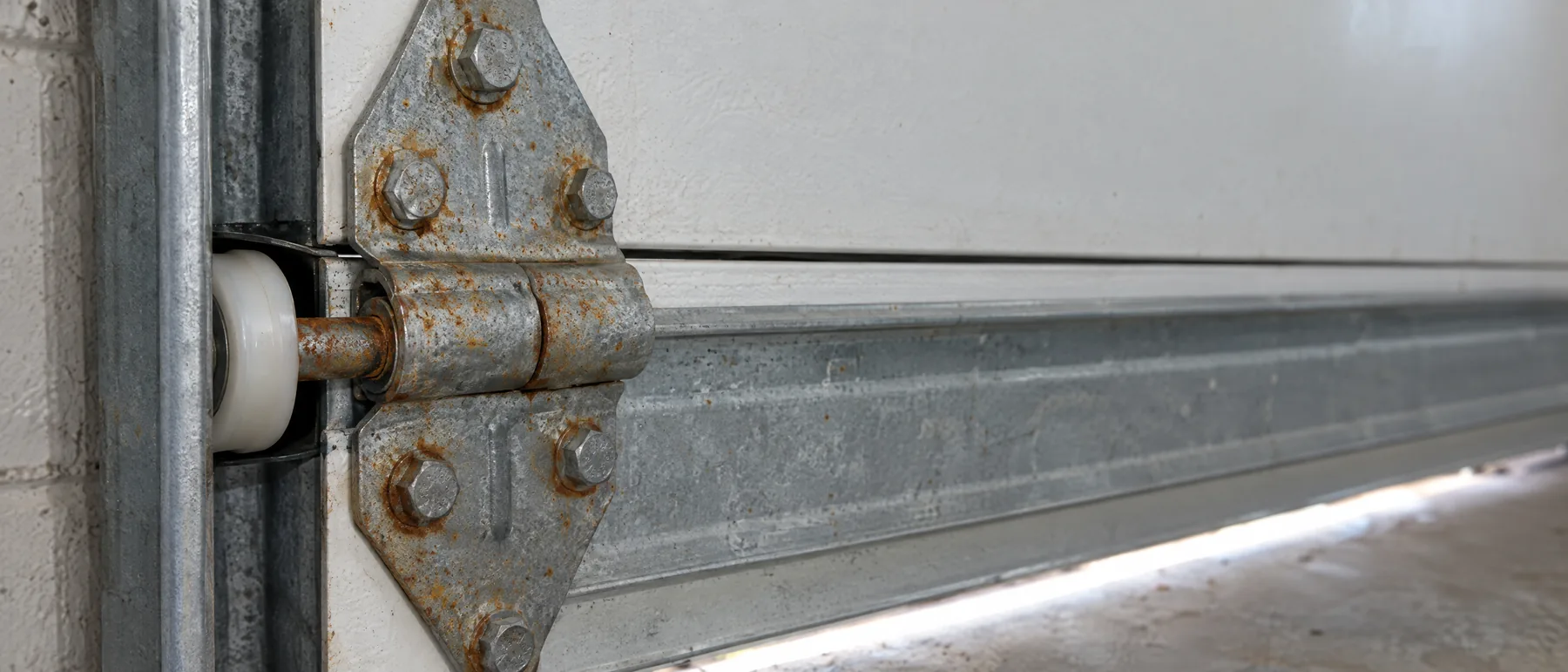
To protect a garage door from salt air, stop salt from building up on it and keep the moving metal parts clean, lubricated and checked. Salt does its damage through moisture. It draws water out of humid air and holds it against the steel, and that damp film is what rusts springs, cables, rollers and track.
The paint on the outside of the door tends to get the attention, but the hardware inside does the real work and is usually where corrosion causes trouble. A rusted roller drags, a rusted cable frays and a pitted spring breaks sooner. Regular rinsing, the right lubricant and a close look every few weeks go a long way near the coast.
How salt air attacks garage door hardware
Coastal air carries fine salt particles that settle on every surface in and around a garage, even when the door stays shut. In humid weather they stay damp, and the steel underneath corrodes faster than it would inland.
- Springs. Rust pits the coil wire, and fatigue cracks tend to start at those pits. A rusty spring often breaks before it reaches its rated cycles. The guide on spring lifespan explains those ratings.
- Cables. The thin steel strands usually corrode first at the bottom brackets, close to the floor where water and salt collect.
- Rollers and hinges. Rust gets into roller bearings and hinge pins, so parts that should turn start to drag, squeal or seize.
- Track and fasteners. Surface rust roughens the track, and bolts and screws can corrode where they meet the door or the frame.
- Door sections. A scratch or chip in the paint on a steel door lets moisture reach bare metal, and rust can creep under the paint from there.
Rinsing salt off the door
Fresh water is the cheapest protection there is. Every few weeks, and after a storm or a windy day with spray in the air, rinse the outside of the door with a garden hose. Start at the top and work down, so the salt runs off instead of collecting along the bottom edge.
Every few months, wash the door with a soft brush or sponge and a mild car-wash soap, then rinse it well. Skip the pressure washer. A strong jet can drive water past the seals, lift paint and push grit into the hardware.
Inside, wipe the lower part of each track with a damp cloth and dry it. Don't loosen or pry at the bottom brackets, which hold the cables under spring tension.
Lubricating hardware in a coastal garage
A thin coat of lubricant keeps moisture off moving steel and lets parts turn freely. Use a spray made for garage doors, usually a silicone or white lithium product. Heavy grease and general household oils tend to hold on to dust and sand, which then grinds away at the parts they were meant to protect.
Apply a light coat to:
- Hinge pivot points.
- Roller bearings, at the center of each roller. Nylon roller wheels themselves don't need it.
- The torsion spring, as a light spray along the coils with the door closed. Don't touch, adjust or clamp anything on the spring.
- The bearings at each end of the torsion shaft.
Leave the tracks clean and dry. Lubricant in a track collects grit and can make the rollers skid rather than roll. Many manufacturers suggest lubricating about twice a year, and in salty air every few months is a sensible interval.
Book a coastal tune-up
Hardware near the ocean wears faster than it does inland. A maintenance visit is a chance to catch rust, stiff rollers and tired springs before something breaks.
Garage door maintenanceSigns salt damage needs attention
Some corrosion is only cosmetic. Some means a part is close to failing. Watch for:
- Orange or dark rust on the spring coils, or flaking on their surface.
- Frayed or rusted strands on a cable, especially near the floor.
- Rollers that squeal, wobble or no longer turn as the door moves.
- Paint bubbling or lifting along the bottom edge of the door.
- A door that has become noisier, slower or jerkier over a few months.
A roller with a rusted bearing rarely turns smoothly again once it seizes, so it is usually replaced rather than freed. See roller replacement for the signs and options. Rust on a spring or a cable is a different matter. Both are under heavy tension, so leave them to a technician.
Parts that hold up better near the coast
When a part has to be replaced anyway, it is worth choosing one that resists corrosion. In general:
- Nylon rollers with sealed bearings cope with moisture better than open steel rollers.
- Stainless steel cables, hinges and fasteners resist rust better than standard galvanized parts.
- Springs are made with protective finishes, such as galvanized or powder-coated coils, that slow surface rust.
- A sound bottom seal keeps rainwater and blown sand from collecting at the base of the door.
None of these makes a door salt-proof. They buy time between replacements, and they still need rinsing and regular checks.
A coastal care routine for your garage door
- Every few weeks: rinse the outside of the door with fresh water.
- Every month or two: look over the springs, cables and rollers for rust, and watch the door run through a full cycle.
- Every few months: wash the door, dry the lower tracks and lubricate the moving parts.
- After a storm: rinse off salt spray and check that the door still opens and closes evenly.
- Once or twice a year: book garage door maintenance and have the springs and cables, the parts under tension, looked at by a professional.