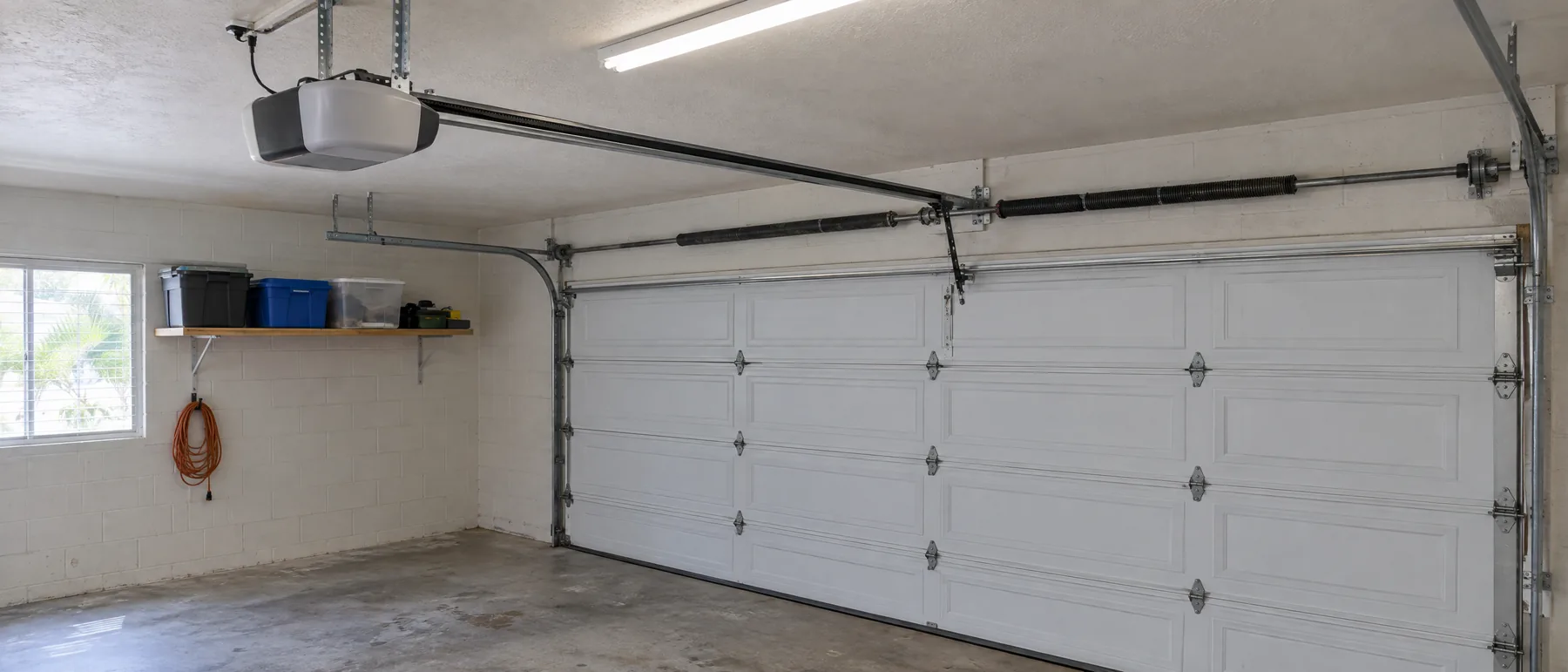
For most homes, the answer to what size garage door opener you need is a 1/2 horsepower unit for a standard single or double steel door, and a 3/4 horsepower unit for a heavier one, such as a solid wood, heavily insulated or oversized door. Doors that are heavier still, or that run many times a day, often call for 1 horsepower or more.
Horsepower is only part of the choice, though. The springs carry the door's weight, not the opener. A well-balanced door feels light at the handle, and the opener only has to move it, not hold it up. Size also covers the rail length, which has to suit the height of the door, and the drive type, which decides how loud the opener is.
Matching opener horsepower to the door
Horsepower ratings are a rough guide to lifting force. As a general rule:
- 1/2 horsepower suits most standard single doors and lighter double doors made of steel or aluminum.
- 3/4 horsepower suits heavier double doors, insulated doors with thicker sections, and doors that are used often through the day.
- 1 horsepower and up is usually kept for very heavy doors, such as solid wood or oversized custom doors.
Many newer openers use DC motors and are sold with a horsepower-equivalent figure or a lifting-force rating instead of plain horsepower. The comparison still works the same way. A higher rating means more force in reserve.
Door makers list weights by model, and the model is often shown on a sticker on the inside of the door. That is the most reliable way to find out what your door weighs.
A bigger motor won't fix a heavy door
An opener is built to guide a balanced door up and down while the springs carry most of the weight. When springs weaken, more of that weight lands on the opener, and the motor, gears and trolley work harder on every trip. A stronger opener can hide the problem for a while, but the springs keep wearing and the door can still fall if one breaks.
So before sizing an opener for an older door, check its balance. With the door closed, pull the opener's release, lift the door by hand to about halfway and carefully let go. A balanced door stays roughly where it is. If it drops or rises on its own, the springs need attention first. The full balance test walks through it, and the guide to spring life and wear explains what weakens them.
Get an opener matched to your door
The right opener depends on the door's weight, height and how often it runs. Ask about opener installation and the drive type that suits your garage.
Opener installationChain, belt, screw or wall-mount?
The drive is how the motor moves the door. It affects noise and upkeep more than lifting power.
- Chain drive. A metal chain pulls the trolley along the rail. Durable and usually the least expensive type, but the loudest. Often fine for a detached garage.
- Belt drive. A steel-reinforced belt does the same job far more quietly. A common pick when a bedroom sits above or beside the garage.
- Screw drive. A long threaded rod spins and carries the trolley along it. There are few moving parts, though it is usually louder than a belt and needs occasional lubrication.
- Wall-mount, or jackshaft. It mounts on the wall beside the door and turns the torsion shaft directly. It frees up the ceiling and suits high or crowded ceilings, but it needs a door with torsion springs.
In a humid, salty garage, ask how each drive's exposed metal holds up, since a bare chain or screw rod can rust. For other ways to cut noise, see making a garage door quieter.
Rail length and door height
The rail is the track the trolley runs along on the ceiling. Most openers come with a rail for a standard 7-foot-tall door. An 8-foot door usually needs an extension kit, and taller doors may need a longer rail or a wall-mount opener. Measure the height of the opening before buying anything.
There also has to be enough room between the highest point the door reaches as it opens and the ceiling to fit the rail and trolley. Low-headroom garages are one place where a wall-mount opener often makes the most sense.
Other features to weigh up
- Battery backup. Runs the door for a limited number of cycles during a power cut, which matters in hurricane season. Without one, see opening a door by hand in an outage.
- Soft start and stop. Common on DC openers, it eases the door into motion and reduces wear on the door and the opener.
- Smartphone control. Lets you check whether the door is closed and close it from your phone.
- Rolling-code remotes. The code changes with each use, so it can't simply be recorded and replayed.
- Safety sensors. Openers sold in the US have long been required to include an automatic safety reverse, usually through the sensors near the floor. Make sure any opener has them fitted and working.