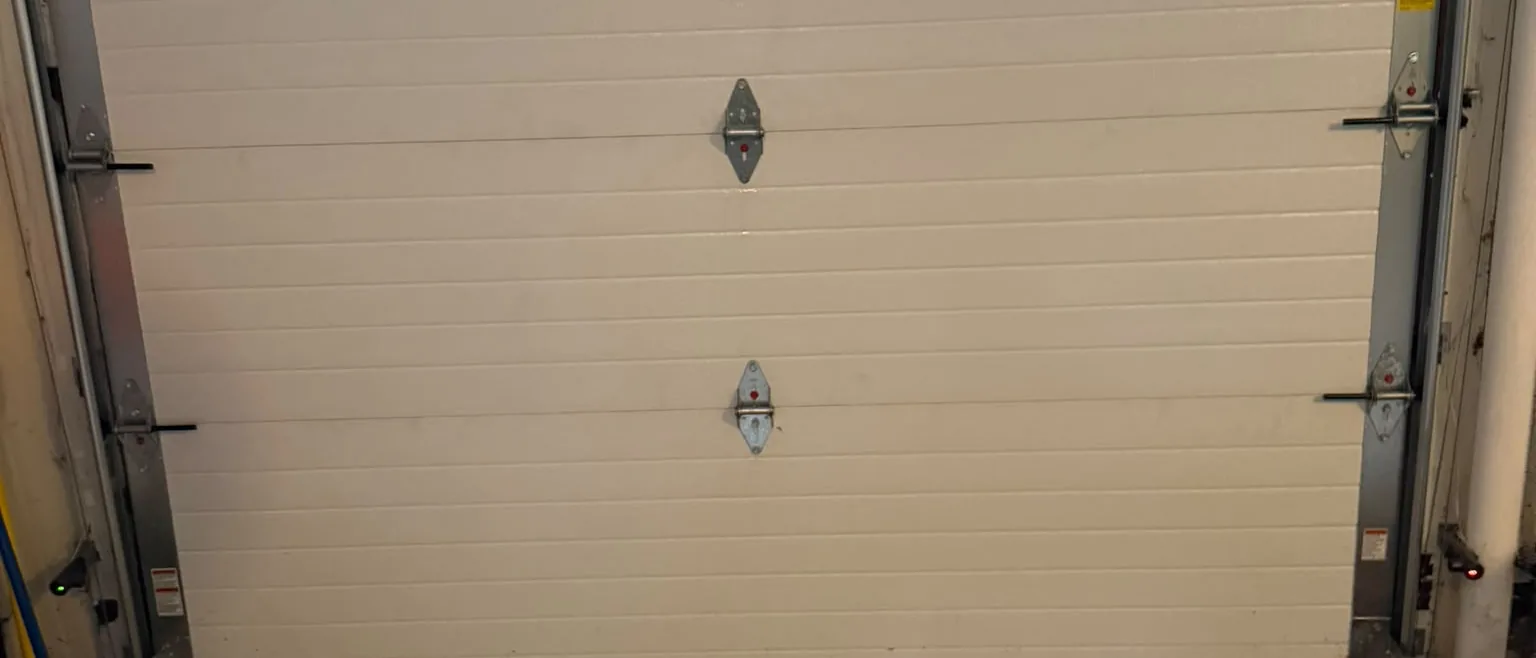
The quickest way to make a garage door quieter is to match the noise to the part making it. Most of the racket comes from dry or worn rollers, loose hardware, dry hinges and the opener's drive. The first three can often be quieted in an afternoon with a socket wrench and the right lubricant.
Some noises aren't a maintenance problem, though. A loud bang, a grinding scrape or a door that jerks as it moves can point to a broken spring or a door leaving its track. Those need a repair, not a spray can, so start by working out which kind of noise you have.
Why your garage door is loud: match the noise to the part
- Squeaking or squealing usually comes from dry hinges, dry roller bearings or springs that need a light coat of lubricant.
- Rattling or clanking often means loose nuts and bolts on the hinges or track brackets, or a slack opener chain.
- Grinding or scraping can mean worn rollers, a bent track or a roller rubbing where it shouldn't.
- Popping or banging while the door moves can come from a spring under strain or a section binding in the track.
- One loud bang while the door is closed is the classic sound of a torsion spring breaking.
Take the last three seriously. Stop using the door and read the section on noises that mean stop, below.
To make a garage door quieter, lubricate the moving parts
A dry door is a noisy door. Use a lubricant sold for garage doors, usually a silicone or white lithium spray. A general-purpose penetrating spray cleans and loosens well but doesn't stay put long, so it isn't the best choice here.
With the door closed and the opener unplugged, apply a small amount to:
- The pivot points of each hinge.
- The bearings at the centre of steel rollers. Nylon wheels themselves don't need it.
- The coils of a torsion spring, as a light coat, without touching any fitting on it.
- The opener's chain or screw drive, if its manual calls for it. Belt drives generally don't need lubricant.
Skip the tracks. Rollers should roll freely inside a clean track, and grease there collects dirt that makes things worse. Wipe the tracks clean instead. Then plug the opener back in and run the door up and down a few times to spread the lubricant.
Tighten loose hardware, with one exception
A door shakes every time it moves, and over months that vibration loosens nuts and bolts. Go over the hinges and the brackets that hold the tracks to the wall with a socket wrench. Snug is enough. Overtightening can strip a bolt or crush the thin steel of a section.
The exception is the bottom bracket on each lower corner of the door. The lift cable attaches there, and the springs keep it under heavy tension. Leave those bolts, the cable drums and anything on the spring assembly alone, however loose they look.
When lubricant won't fix it
If the door bangs, grinds or runs crooked, a spray can won't help. Momentum covers garage door repair in Fort Lauderdale, 24 hours a day.
Fort Lauderdale repairsWorn rollers and hinges: the noisy garage door fix that lasts
If lubricant and a wrench don't quiet things down, look at the rollers next. Bare steel rollers are loud by nature, and worn ones wobble, chatter and grind. Nylon rollers with sealed ball bearings run much more quietly, which makes them a common upgrade. A wheel that wobbles on its stem, flat spots, cracks or loose bearings all mean a roller is worn. How long garage door rollers last goes into the signs in more detail.
Hinges wear too. A hinge with a cracked leaf or a worn, oval pivot hole lets the sections knock together as the door bends over the curve of the track.
The rollers held in the middle hinges can often be changed one at a time by a careful homeowner. The bottom rollers sit in the brackets that hold the lift cables, though, so that pair is not a homeowner job. If you'd rather not do any of it yourself, see having the rollers replaced.
Quieting a loud garage door opener
Sometimes the opener is louder than the door. A few things to check:
- Chain slack. A loose chain slaps against the rail. Most manuals explain how to adjust it and how much sag to leave.
- Mounting. An opener bolted straight to the ceiling framing can pass vibration into the rooms around the garage. Rubber isolation pads between the bracket and the ceiling can soften it.
- Drive type. Chain drives tend to be the loudest and belt drives the quietest, which matters most when a bedroom sits above or beside the garage.
- Door balance. A heavy, unbalanced door makes an opener labour and groan. The half-open balance test will tell you.
If an old opener is still noisy after adjustment, switching to a quieter drive is a real option. Momentum offers garage door opener installation if you decide to make the change.
Noises that mean stop, not spray
Some sounds mean a part has failed or is about to. Stop using the door and keep people clear if you hear:
- A single loud bang from the garage, after which the door feels very heavy or the opener struggles. That is usually a broken spring.
- Grinding or scraping while the door tilts, jerks or sits crooked. A roller may be leaving the track.
- Snapping from a cable, or you notice a cable that looks frayed or loose.
Don't try to run the door through it. If you're in Fort Lauderdale, Momentum takes calls around the clock for repairs to Fort Lauderdale garage doors.