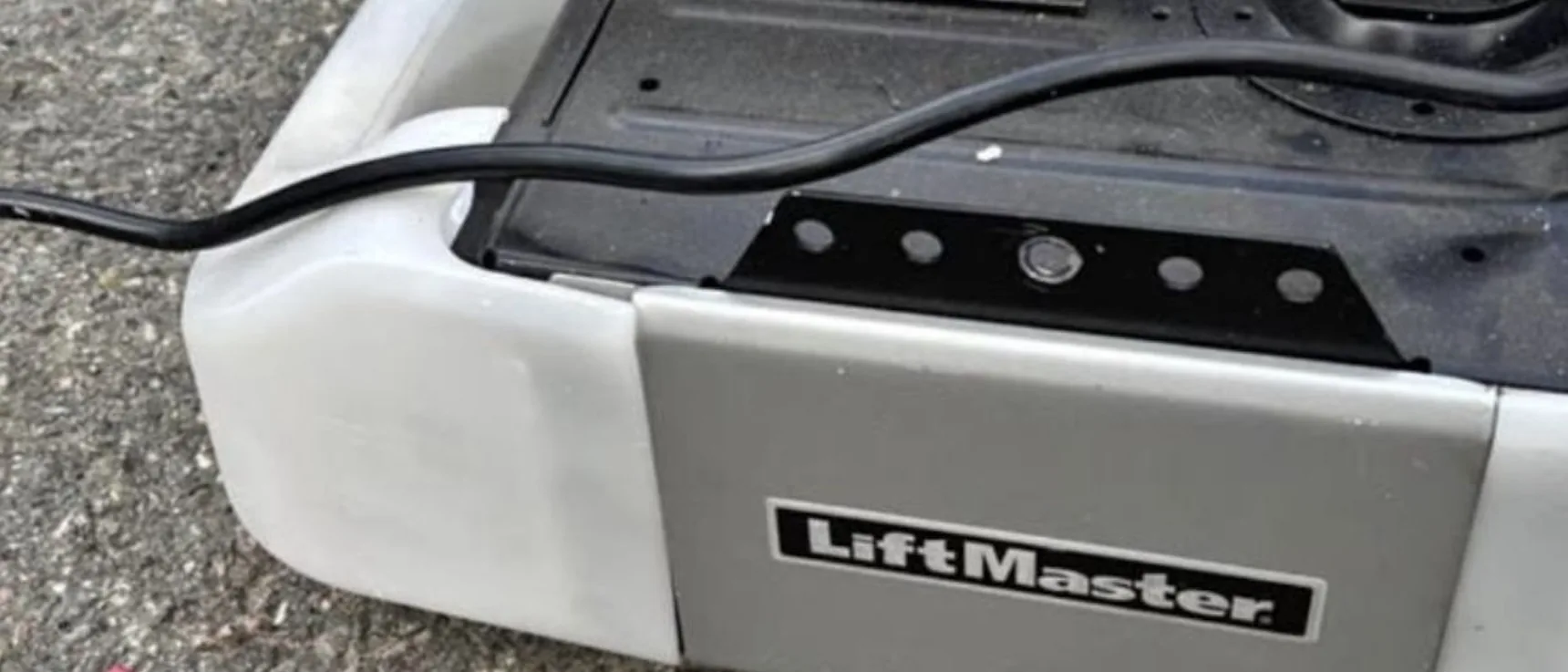
An old garage door opener without safety sensors is usually one made before 1993. The federal safety standard for residential openers applies to units manufactured on or after January 1, 1993, and since then every opener made for the U.S. has had to include a second safety reversing feature, most often a pair of photo eyes near the floor. If your opener has no such feature, the door industry's advice is to replace the opener.
North Miami Beach is a place where the question is worth asking, because much of its housing went up in the 1950s, 60s and 70s. But a house's age tells you nothing certain about the opener in its garage. This guide shows how to tell what you have, what the federal rule does and doesn't cover, and when repair stops making sense. Momentum's garage door repair in North Miami Beach page covers the everyday repairs.
How old North Miami Beach's homes are
The Census Bureau's American Community Survey (2020 to 2024 estimates) puts the median year built for housing in North Miami Beach at 1967. Of the city's 17,533 housing units, the estimates break down like this:
| Year built | Housing units |
|---|---|
| Before 1950 | 629 |
| 1950s | 5,394 |
| 1960s | 3,882 |
| 1970s | 4,226 |
| 1980s | 970 |
| 1990 or later | 2,432 |
Add up the rows before 1990 and you get about 15,100 units, roughly 86 percent of the total. Not every one of those units has a private garage door, and an opener can be replaced more than once over the life of a house.
So the numbers say older openers could still be out there. They don't say yours is one of them. The only way to know is to look at the unit on your own garage ceiling.
Do all garage doors have safety sensors?
No. The federal standard for residential garage door operators, 16 CFR Part 1211, applies to operators manufactured on or after January 1, 1993 for sale in the United States. DASMA, the trade association for door and opener manufacturers, puts it in plain words: since 1993, all openers made for the U.S. must include a second safety reversing feature such as photoelectric eyes.
Two details are worth keeping straight:
- The rule is about manufacture. It sets what openers made from 1993 on must have. It isn't a rule about removing openers that were already installed.
- The sensors belong to the opener. A door that's lifted by hand has no opener, so it has no sensors either. The question only applies to a motorized door.
Even so, the industry's advice on older units is direct. DASMA says that if your opener lacks a second safety reversing feature, "it's time to get a new opener."
How to tell whether your opener predates 1993
- Look near the floor. Check both sides of the door opening, a few inches up, for two small units facing each other with thin wires running up the wall. DASMA says photo eyes should sit no higher than six inches above the floor. No units there is the first sign of an older system.
- Read the label on the motor unit. Most openers carry a label on the housing with the brand and model, and often a serial number or date of manufacture. A stepladder and a flashlight are usually enough to read it. Unplug the opener first if you need to reach close to it, and keep hands away from the chain or belt.
- Ask the manufacturer. If the label gives a brand and model but no date, the maker's support line can often tell you when that model was built.
- Don't count on contact reversal alone. Many openers reverse when the door presses against something. That is the first safety feature. The 1993 change added a second one, usually photo eyes, which reverses the door before it reaches a person.
If there are no sensors and the label shows a date before 1993, or the maker confirms the model is that old, you have your answer. If the label is gone or unreadable and there are no sensors, treat it as an old unit.
Garage door opener installation
An opener with no second safety reversing feature is one the industry says to replace. Opener installation covers matching a new unit to the door and setting up its sensors.
Opener installationCan you run a garage door opener without the sensors?
People ask this for two different reasons, and the answer is the same for both.
If the opener never had sensors
It can still move the door, and that is exactly the problem. Its only protection is reversing on contact, if that still works after decades of use. Run the reversal test in the auto-reverse test guide. If the door fails it, stop using the opener until it's dealt with. If it passes, the opener still lacks the second feature the industry now expects.
If a newer opener's sensors are failing
A modern opener is designed not to close the door by remote when its sensors can't see each other. That is a safety feature doing its job, not a fault to work around. The fix is to clean, realign or repair the sensors. Never bypass them or move them where they can't see the floor. This guide won't describe how to defeat them, because a door that closes without them can trap a child or a pet. How garage door sensors work explains what the indicator lights mean and why the beam breaks.
Repair or replace an old opener?
Even when an old opener still runs, keeping it running gets harder. Genie, an opener manufacturer, says on its policy page for pre-1993 openers that most units made before 1993 don't have infrared sensors or other external entrapment protection. Its headline advice is that pre-1993 openers should be replaced, not repaired. Genie stopped supporting repair of all pre-1993 Genie openers on July 1, 2013, which ended technical service support and replacement parts for them.
Other manufacturers set their own support policies, so check with the maker of your unit. A sensible way to weigh it:
- Replace if the opener has no sensors, if parts for it can no longer be found, or if it fails the reversal test.
- Repair if it's a newer unit with sensors and the fault is a single part, such as a worn drive gear, a remote that won't pair or a sensor knocked out of line. Garage door opener repair covers those faults.
A house with older wiring is one more thing to keep in mind. If the outlet near the opener is worn, loose or missing, that's work for a licensed electrician, and it's better found before a new opener goes up.
Before a new opener goes on an older door
A new opener is only as safe as the door it's attached to. An older door in an older house deserves a look first:
- Check the balance. An opener isn't built to lift a door whose springs have lost their tension, and a heavy door wears a new motor out early. The balance test takes a few minutes.
- Look for worn parts. Broken springs, frayed cables and rollers that drag get fixed before the new opener is fitted, not after.
- Plan the sensors. They need a spot on each side of the opening within six inches of the floor, with a clear path for the wires.
- Check the power. There should be a working outlet close to where the motor will hang.
Once a new opener is in, test the auto-reverse with both checks and repeat them regularly. Many manufacturers suggest once a month. Opener installation explains how an opener is matched to the door, and Momentum takes calls about it at (954) 636-6320, day or night.