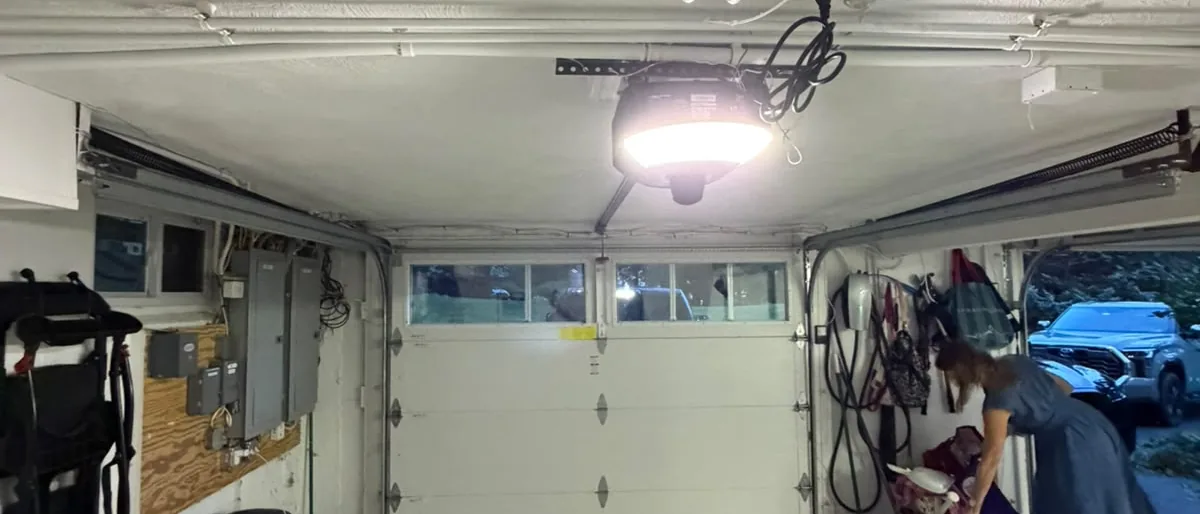
If your garage door opener was flooded, it is not safe to use until the garage is dry and the power to it has been checked. The motor unit hangs from the ceiling and often stays out of the water. The parts that do get wet are lower down: the outlet it may plug into, the thin wires that run down the wall to the wall button, and the two safety sensors that sit just above the floor. Leave the opener unplugged until those have been looked at.
Fort Lauderdale has seen what a sudden flood does to a neighborhood, so this is worth knowing before the next one. The steps below run in order, from the hours when water is still standing to the weeks after it drains. For a door that needs help now, Momentum's garage door repair in Fort Lauderdale line is answered around the clock.
What the April 2023 flood showed about low-lying garages
The city's disaster recovery action plan describes the storm that began on April 12, 2023. A slow-moving system brought more than 25 inches of rain to the area. The next morning the mayor declared a state of emergency for the entire city, as entire neighborhoods were under feet of water.
Most of a garage door opener is mounted high, but several of its parts live close to the slab. If water reaches your garage floor, these are the first to sit in it:
- The safety sensors. The Door and Access Systems Manufacturers Association says the photo eyes should be no higher than six inches above the garage floor, so even shallow water can cover them.
- Their wiring and the wall button wiring. Both run down the wall and along the floor in many garages.
- A low outlet. Some openers and extension cords plug into outlets well below ceiling height.
- The bottom of the door. The bottom seal, the lowest section and the brackets where the lift cables attach.
While water is still in the garage
The guidance on Ready.gov's flood page is blunt. Do not touch electrical equipment if it is wet or if you are standing in water, and turn off the electricity to prevent shock if it is safe to do so. In a garage that means:
- Don't press the wall button or a remote, and don't unplug the opener while you are standing in water.
- Switch off the breaker for the garage only if you can reach the panel on dry ground. If you can't, leave it and wait.
- Remember that some openers have a backup battery. Cutting the power at the panel may not stop one of those from running, so keep people clear of the door anyway.
- Don't force the door open to let water out. Water drains on its own, and a door run through debris can bend track or tear the bottom seal.
If you have to get a car out once the water is gone but the power is still off, the guide to opening a garage door without power explains the emergency release and when not to use it.
Before you plug the opener back in
Wait until the garage floor and walls have dried out. Then work down this list before the opener gets power again.
- The outlet and circuit. If water reached the outlet the opener uses, or any outlet on that circuit, have a licensed electrician check it before anything is plugged in. Replacing an outlet or a GFCI device is electrical work, not garage door work.
- The motor unit. Look at the housing and the cord for a water line, mud or a burnt smell. If the unit itself got wet, leave it unplugged and have it checked.
- The sensors. Look for silt on the lenses and corrosion at the wire connections. Wipe the lenses with a soft dry cloth. Don't take the sensors apart.
- The wires along the wall. Look for loose staples, wires pulled free or green and white corrosion on bare ends.
- Any extension cord. If the opener ran from a cord that lay on the floor, replace the setup rather than drying the cord and using it again.
- The door by hand. With the opener disconnected and the door closed, lift it a little. A door that suddenly feels much heavier points to a spring or cable problem, not the opener.
Have the opener checked
Once the power has been made safe, an opener that hums, reverses or ignores the remote usually has one failed part. Opener repair covers the common faults.
Garage door opener repairDoes unplugging a garage door opener reset it?
On many openers, cutting power for a short while clears a temporary glitch, such as a logic board that froze or a light that keeps flashing. It does not undo water damage. If moisture got into the circuit board, the wiring or the sensors, the fault will still be there when power returns, and it may be worse.
So after a flood, don't treat plugging it back in as a test. Do the checks above first. If the opener then runs with odd behavior, such as a door that reverses for no reason, a dead wall button or a warning light, stop and note what it does. Those details help whoever looks at it narrow the fault to one part.
Take photos of the opener, the outlet and the floor-level parts before anyone works on them. A record of where the water line sat is useful later, for a repair and for any claim.
The first run after the water is gone
Once the outlet is cleared and the parts look dry and clean, run the door once with everyone standing well back and nothing in its path.
- Watch the small lights on both sensors. A light that is off, blinking or flickering often means a wet or corroded connection, or a sensor knocked out of line by moving water.
- Listen for grinding, clicking or a motor that hums without moving the door.
- Watch both sides of the door. One side lagging can mean a cable shifted on its drum.
Then confirm the door still reverses. The auto-reverse test covers both the sensor check and the pressure check. If the door won't close, or reverses on its own, the sensors are the usual suspect, and sensor repair explains the common faults.
Damage that shows up weeks later
Flood water near the coast can carry salt, silt and whatever was on the street. Some of what it leaves behind takes a while to show.
- Rust at the bottom brackets and cable ends. The lift cables attach at the lowest corners of the door, right where water sat. Rust there can weaken the strands from the inside. The article on why garage door cables break explains what to look for.
- A sensor that works some days and not others. Corrosion on a connection can come and go with the humidity.
- A stiff or torn bottom seal, or a lower section with paint lifting along its bottom edge.
- Silt in the bottom of the tracks. Mud dries hard in the channel, and the rollers bump over it every trip. Wipe it out with a damp cloth and dry the track, rather than greasing over it.
Rinsing the lower door and the bottom of each track with fresh water once things are dry helps slow corrosion. Leave the springs, cables and bottom brackets to a technician if they show rust, since they are under heavy tension.
Where Fort Lauderdale's flood recovery programs fit in
On June 4, 2026, the city announced that applications for its flood recovery programs were open. The city says the programs may include home rehabilitation and reconstruction, elevation of homes, and reimbursement for eligible flood-related expenses. It lists 954-495-4533 for residents who need help with the application.
Who qualifies, and which costs count, is for the city to decide. If a garage door repair after a flood may be part of a claim, keep notes and photos of the damage before anything is fixed, and ask the city directly what it needs.