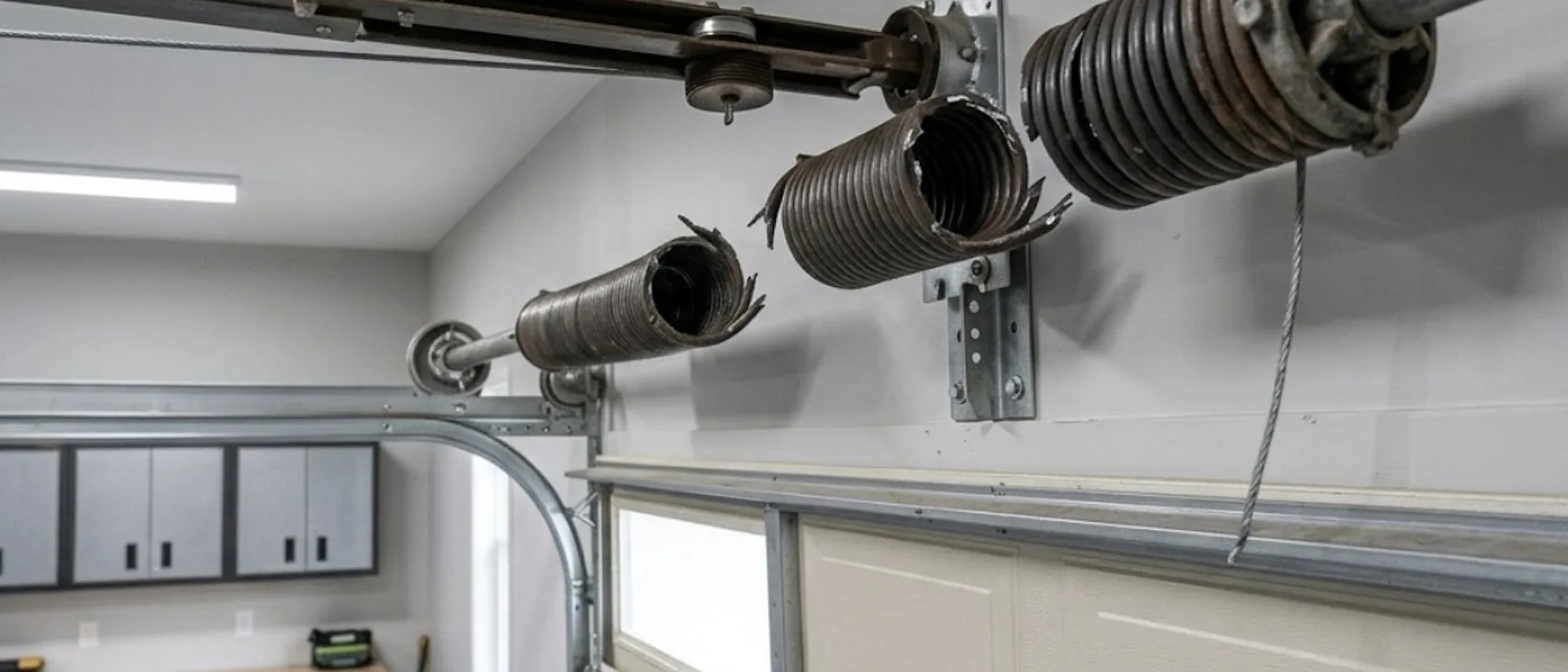
Why do garage door cables break? Usually for one of three reasons: ordinary wear, rust, or a fault somewhere else in the door that puts the cable under the wrong kind of load. Most cables don't snap without warning. They fray one strand at a time, often where they bend around a drum or pulley, or where they meet the bottom bracket near the floor.
The cables are the link between the springs and the door. They carry the door's weight on every lift, so a cable that is fraying, rusting or slipping is under heavy tension. If one has snapped or come loose, stop using the door. A door with only one working cable can tilt, jam in its tracks or drop.
How garage door cables work
On a door with torsion springs, a lift cable runs from a bracket at each bottom corner up to a drum on the shaft above the door. As the springs unwind, the drums turn and wind the cables in, lifting the door evenly from both sides.
On a door with extension springs, the lift cables run through pulleys attached to the springs along each track. These doors also have a separate safety cable through the middle of each spring, which holds the spring in place if it breaks. That safety cable carries no load in normal use.
With either system, the two lift cables share the load and have to stay the same length. If one stretches, slips or frays, the door starts to rise unevenly.
Wear: the most common reason cables break
A lift cable is made of many thin steel strands twisted together. Every cycle bends it around a drum or pulley and straightens it again. Over thousands of cycles, single strands fatigue and snap. Once a few have gone, the rest carry more of the load and fail faster.
There is no fixed lifespan for a cable. Many last about as long as the springs, which is one reason cables are often replaced when the springs are. Cables on a door that is used heavily, or that rub against something as they move, wear out sooner.
Rust, moisture and salt air
The lower end of each cable sits close to the garage floor, where rainwater, wet tires and cleaning water collect. That is where corrosion usually starts. Near the coast, salt in the air settles on the cable and keeps it damp, and rust can work into the strands where it is hard to see.
A cable that looks rusty, stiff or discolored near the bottom bracket is worth having checked before it lets go. Rinsing and keeping the lower door dry are the main defenses, covered in salt air care for garage doors.
Leave it and call for cable repair
A broken or loose cable is still under spring tension. Keep the door still and have the cable, drums and springs checked together.
Cable repairWhen another part is the real cause
Sometimes the cable is the victim of a different failure.
- A broken spring. When a torsion spring snaps, the cable on that side can suddenly lose tension, unwind from its drum and tangle. Plenty of snapped or loose cables turn out to have started with a spring. The guide to spring life and wear explains why springs give out.
- A door stopped while closing. If the door comes down onto an object, the drums can keep turning while the door stays put. The cables go slack and can slip off their drums.
- A door off its track. A roller that leaves the track lets the door twist, putting one cable under far more strain than the other. See off-track door repair for that problem.
- Parts out of line. A loose drum, a bent bottom bracket or a cable rubbing on the track or frame will cut through strands over time.
- The wrong cable. A cable that is too thin or the wrong length for the door is overloaded from the start.
Signs a garage door cable is about to fail
- Frayed, broken or bristling strands, especially at the bottom bracket.
- Rust or dark discoloration along the cable.
- A cable that looks loose or slack when the door is closed.
- The door opening or closing unevenly, with a gap under one side.
- A slapping, grinding or snapping sound near the top corners of the door.
- Cable on a drum that looks bunched or crossed instead of sitting neatly in its grooves.
Any one of these is a reason to stop and have the door looked at before the cable breaks.
Is it safe to use a door with a broken cable?
No. With one cable broken or off its drum, the door's weight hangs unevenly. The door can twist in its opening, bind in the tracks, or fall if the remaining cable or a spring gives way.
- Leave the door where it is, and don't run the opener.
- Keep people, pets and cars away from the door.
- Don't try to rewind a cable onto its drum or loosen a bottom bracket. Both are under spring tension and can release suddenly.
- If the door is stuck open and you need to secure the house, call for help rather than forcing it down.